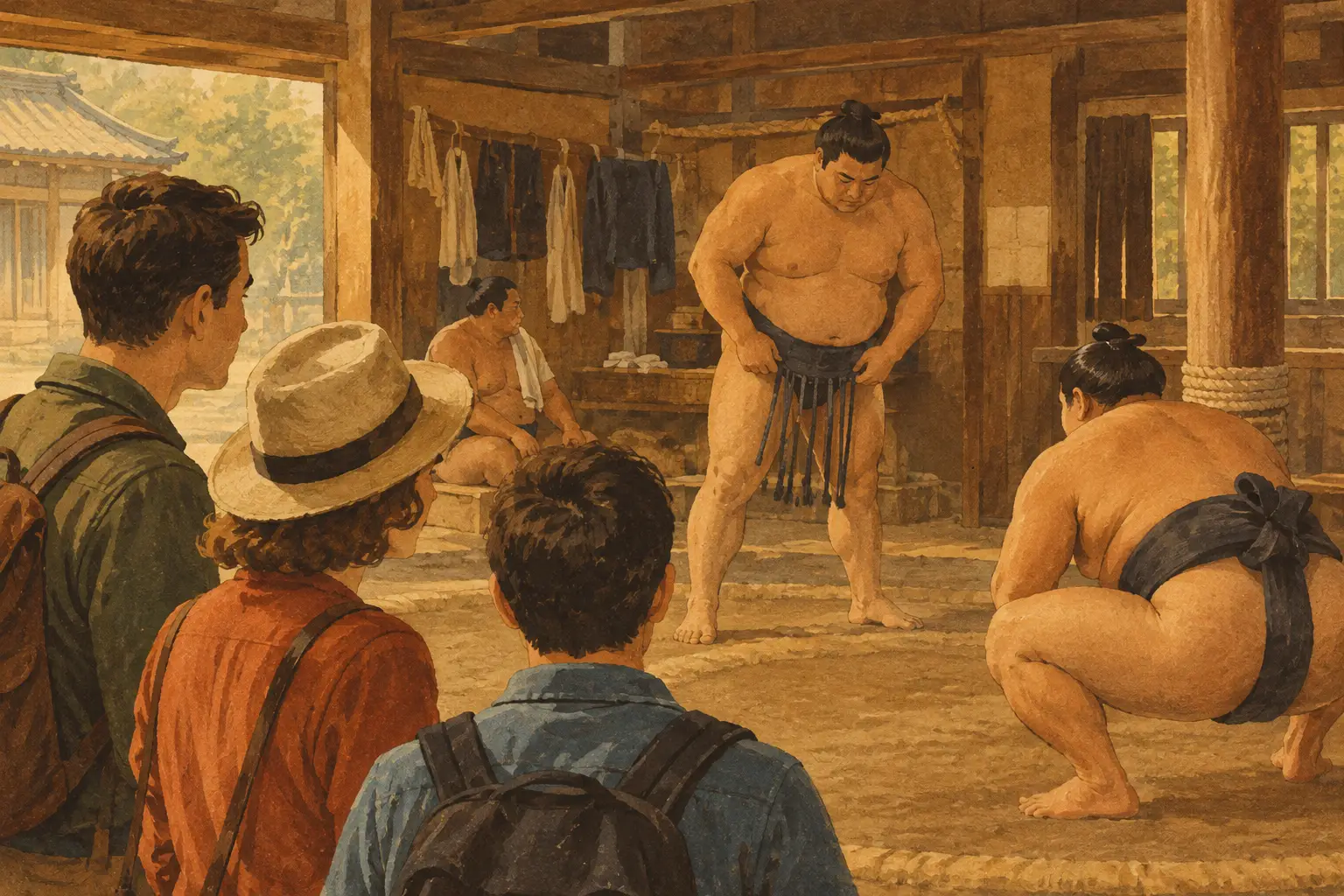
The room goes quiet before the first collision. Bare feet grip the raised clay ring, a coach watches from the side, and two enormous athletes meet with a crack that seems to shake the floor. If you have wondered, can tourists visit sumo stables, the answer is yes – sometimes. But this is not a standard attraction, and that difference is exactly what makes a stable visit so memorable.
A sumo stable, or sumo beya, is where professional wrestlers live, train, eat, and follow a strict daily hierarchy. Watching morning practice offers a rare view of a living Japanese tradition, not a staged performance. For Japan lovers worldwide, it can be one of Tokyo’s most powerful cultural experiences, provided you enter with patience, humility, and respect for the people whose workplace and home you are visiting.
Can Tourists Visit Sumo Stables in Tokyo?
Some stables accept overseas visitors through organized visits, while others do not welcome visitors at all. Permission can change with little notice due to tournament schedules, injuries, stable events, wrestler availability, or the preferences of the stablemaster. A stable that welcomed guests last month may be closed to visitors this week.
Tokyo is the best place to look, especially around Ryogoku, the neighborhood most closely associated with professional sumo. That said, you should not simply arrive at a stable door early in the morning and hope to walk in. Training spaces are private. Unannounced visits can disrupt practice and put staff in an uncomfortable position.
The most reliable route is to reserve a visit in advance through an established guide or tour organizer that has an existing relationship with a stable. These arrangements usually include clear instructions about arrival time, photography, behavior, and whether an interpreter is present. They also reduce the risk of misunderstanding rules that may not be explained in English on site.
Expect availability to be limited. The scarcity is part of the experience: you are being admitted to observe a serious discipline, not buying access to a daily show.
What You Actually See at Morning Practice
Practice, called keiko, usually happens early, often beginning between 6:00 and 8:00 a.m. The exact time varies greatly. Higher-ranked wrestlers may train later in the session, so an early start does not always mean you will see the biggest names immediately.
A visit may last anywhere from 45 minutes to two hours. You will typically sit at the edge of the training room, sometimes on the floor, and watch in silence. There is no announcer explaining each movement, no background music, and no crowd reaction. That stillness makes every stomp, slap, and impact feel more intense.
You may see shiko, the powerful leg-lifting stomps associated with sumo; repeated practice bouts; pushing drills; stretching; and wrestlers receiving corrections from the stablemaster. Sumo is often reduced to size in casual conversations, but up close it reveals balance, timing, endurance, flexibility, and astonishing speed. A wrestler’s body is both formidable and finely tuned.
There is also a sense of mono no aware in the experience: the awareness that this exact morning, this group of wrestlers, and this chance to observe them will not come again in the same way. It is a small window into a world that usually remains behind closed doors.
The Etiquette That Makes Your Visit Welcome
The golden rule is simple: follow the host’s instructions without exception. Every stable has its own policies, and a guide’s directions take priority over anything you read elsewhere.
Silence is usually essential. Turn your phone fully off or use airplane mode before entering, not merely silent mode. Even a vibration or camera shutter can be distracting in a room where athletes are concentrating and the stablemaster is giving instruction. Do not chat, whisper, point, or react loudly to hard falls and forceful training.
Photography rules vary. Some visits permit photos only from a designated spot; some allow pictures but no video; others prohibit all photography. Never use flash. Do not assume that a wrestler posing after a practice session is part of the experience, either. If a photo opportunity is offered, your host will tell you.
Dress modestly and comfortably. You may be asked to remove your shoes, so clean socks are a thoughtful detail. Avoid strong perfume or fragrance, as the training room is close and warm. Arrive early, because coming in late can mean missing entry altogether.
A few behaviors are especially worth avoiding:
- Do not eat, drink, smoke, or chew gum during practice.
- Do not cross into the training area or step onto the dohyo, the raised ring.
- Do not touch a wrestler, ask for an autograph, or begin a conversation unless invited.
- Do not leave midway through practice unless your host says it is acceptable.
These rules are not meant to make visitors feel unwelcome. They protect a concentrated training environment and acknowledge sumo’s deep traditions.
How to Book a Sumo Stable Visit Wisely
When comparing options, look beyond the promise of “morning sumo practice.” A responsible organizer should state which stable is involved only when appropriate, explain that schedules can change, and provide specific etiquette guidance before the visit. They should never guarantee that you will meet a particular wrestler.
Ask whether the visit is a small group or a large group, whether an English-speaking guide attends, how long you will be inside, and what happens if practice is canceled. Small groups usually feel more respectful and offer a better view, though they may cost more. A larger group can be more affordable but may be less intimate and more difficult for the stable to host.
Be cautious of bookings that treat wrestlers as props or make unrealistic promises. Sumo is a professional sport with demanding training and a centuries-old ritual culture. The best experiences frame visitors as observers, not customers entitled to entertainment.
If you are traveling with children, check age rules before reserving. Some stables do not accept young children because extended silence is required. Travelers with mobility concerns should also ask about floor seating, stairs, and the possibility of standing for a long period. Conditions can be more basic than at a museum or theater.
When a Stable Visit May Not Be the Best Choice
A stable visit is unforgettable for travelers who can sit quietly, wake up early, and appreciate an unscripted experience. It is less ideal if your group wants a high-energy show, detailed English commentary throughout, or a guaranteed chance to take photos with wrestlers.
In that case, consider attending an official grand sumo tournament if your dates align with one. Tournament days offer the ritual entrance ceremonies, referee calls, colorful kesho-mawashi aprons, and the electric response of a full arena. A stable visit shows the work behind the spectacle; a tournament shows the public ritual at its grandest. Both are meaningful, but they are different encounters with sumo.
You can also spend time in Ryogoku outside the stable itself. The neighborhood’s sumo connections appear in its restaurants, street names, museums, and atmosphere. A bowl of chanko nabe, the hearty hot pot closely associated with sumo wrestlers, is a fitting way to continue the day. It is not merely “sumo food,” but a comforting communal meal with countless household-style variations.
A Cultural Experience, Not a Checklist Item
The appeal of visiting a sumo stable is not that you can say you saw wrestlers train. It is that you witnessed commitment at close range: repetition before sunrise, hierarchy expressed through action, and a tradition constantly renewed by people doing difficult work every day.
Come prepared, stay quiet, and let the morning unfold on its own terms. You may leave without a selfie, a souvenir, or even a word exchanged with a wrestler. Yet the sound of those first impacts, and the discipline behind them, can stay with you far longer than a typical Tokyo sightseeing stop.