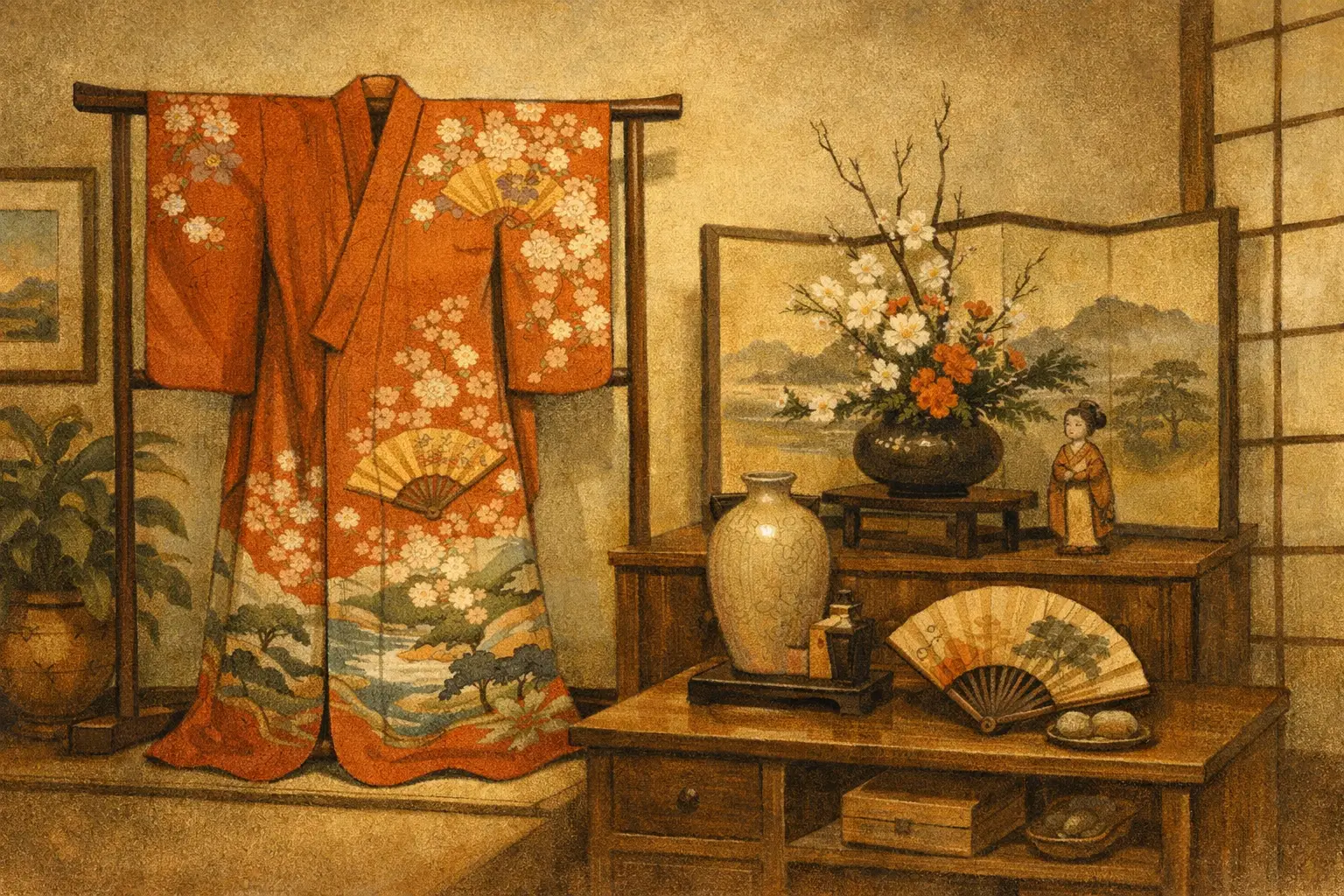
A kimono should not disappear into the back of a closet just because you do not have an occasion to wear it. Learning how to display a kimono at home lets you enjoy its weaving, color, and small hand-finished details every day. A single garment can turn an ordinary wall, guest room, or quiet reading corner into a personal connection with Japan.
The best display is not always the biggest or most dramatic one. It is the one that protects the textile, suits your space, and gives the kimono room to be seen. Think less like a costume display and more like presenting a treasured piece of textile art.
Start with the kimono’s condition and story
Before choosing a wall or stand, take a close look at the garment. Is it silk, cotton, wool, synthetic fabric, or a modern yukata? Is it an antique piece with delicate embroidery, or a newer kimono you wear regularly? These answers affect how long it can safely stay on display.
Silk is especially sensitive to direct sunlight, humidity, dust, and stress at the shoulders. An old formal kimono, such as a furisode with long sleeves or a black tomesode with family crests, deserves a gentle setup away from windows and heating vents. A cotton yukata is usually more forgiving and can work beautifully as a seasonal summer accent.
Its story matters, too. Perhaps you found it during a trip to Kyoto, inherited it from family, or chose it because its cranes, maple leaves, or chrysanthemums spoke to you. Let that story guide the space around it. A kimono with autumn momiji motifs feels wonderful near warm wood, ceramics, and a small branch arrangement. A pale indigo piece can bring calm, wabi sabi character to a bedroom or entryway.
How to display a kimono at home on a rod
The traditional-inspired choice is a kimono display rod, often called an ikou. It holds the garment open in a T shape so the sleeves, body, and pattern read clearly. You can use a purpose-made wooden stand, a wall-mounted rod, or a sturdy curtain rod placed high enough that the hem does not drag.
The key is supporting the kimono across its upper width rather than pinching it at a few points. Slide a smooth, padded rod through the sleeves and body area near the shoulders. Avoid thin wire hangers, clips, or anything sharp that can create permanent creases, snag threads, or pull at the lining.
For a wall display, leave breathing room around the garment. A kimono is visually generous, often measuring close to five feet across when the sleeves are extended. If it is crowded by shelves, posters, or furniture, its silhouette gets lost. One kimono on a clean wall usually has more impact than several textiles competing for attention.
If you rent your home, a freestanding garment rack can be a smart alternative. Choose one with a wide base, add a padded wooden crossbar, and place it in a low-traffic corner. It creates a flexible display that can move with you and can double as a way to air out a kimono before storing it.
Frame a kimono only when the textile allows it
Framing can make a special kimono feel like a gallery piece, but it is best for a partial display rather than an entire garment. A full kimono is large, heavy, and difficult to frame without folds or tension. Consider displaying one sleeve, an elaborately patterned panel, a matching haori, or a small textile fragment instead.
Use a deep shadow box with UV-protective glazing if possible. The fabric should be mounted with archival-safe methods, never glued, stapled, or taped. A professional textile framer is worth considering for vintage silk, hand-painted yuzen, shibori, gold-thread embroidery, or anything with sentimental value.
A framed section can be a great solution for smaller homes. It gives you the color and craftsmanship of the garment without needing an entire blank wall. Pair it with a simple wood frame in natural oak, dark walnut, or black. The frame should support the textile, not compete with it.
Create a seasonal kimono corner
Japan’s seasonal awareness is one of the most joyful ways to style a kimono. Rather than leaving one garment up year-round, rotate your display a few times a year. This reduces long-term light exposure and gives your home a small sense of seasonal ritual.
In spring, choose sakura, plum, or soft pastel designs. Summer is perfect for a breezy yukata, indigo cotton, or water-inspired motifs. For fall, look for maple leaves, pampas grass, or richer rust and gold tones. Winter displays can feature pine, bamboo, cranes, or the crisp geometry of a kasuri weave.
Keep the supporting objects modest. A small vase, a piece of Japanese pottery, a shikishi calligraphy board, or one ukiyoe-style print nearby can add atmosphere. The goal is not to turn the room into a themed set. Let the kimono remain the heart of the scene, with a little mono no aware in the changing details around it.
Use an obi as art when space is limited
An obi is often the easiest Japanese textile to display at home. Its long, narrow shape works over a mantel, above a headboard, down a hallway wall, or across the back of a bench. It also lets you show striking brocade, geometric patterns, and seasonal designs without needing as much space as a full kimono.
Drape an obi loosely over a smooth wooden rail, or mount it flat inside a large frame. Do not pull it tightly, especially if it is old or heavily woven. A little natural softness looks better and protects the fibers.
You can also pair a kimono with its obi for a more complete presentation. Hang the kimono open on a rod, then lay the obi horizontally across the middle in the position where it would be worn. This gives visitors a clearer sense of how the pieces work together while creating layers of pattern and texture.
Protect the fabric while it is displayed
The most beautiful display will not feel good if it fades or damages a garment you love. Keep kimono away from direct sun, fireplaces, radiators, kitchen grease, and damp basements. Indirect light is ideal. If the room gets strong daylight, rotate the textile more frequently or use curtains and UV-filtering window film.
Dust is another quiet problem. Gently inspect the garment every few weeks and use a soft brush only if you know the fabric is stable. Do not spray fabric freshener or perfume near it. For valuable or antique pieces, limit display time and return the kimono to proper storage between seasons.
When storing it, make sure the garment is clean and fully dry. Fold it along its existing lines using acid-free tissue where needed, then keep it in a breathable storage box rather than plastic. If you are unsure about stains, silk weakness, or insect damage, seek help from a textile conservation professional instead of trying a home fix.
Let the display feel like your Japan story
There is no single correct way to display a kimono. A minimalist home may call for one ivory silk kimono on a pale wall. A collector’s study might look better with an indigo yukata, a vintage travel poster, and a few carefully chosen Japanese craft pieces. What matters is that the garment is treated with care rather than used as random decoration.
For all Japan lovers worldwide, this is one of the loveliest ways to bring a memory, a craft tradition, or a dream trip into daily life. Give the kimono space, protect it from harm, and let its patterns change the mood of a room every time you pass by.