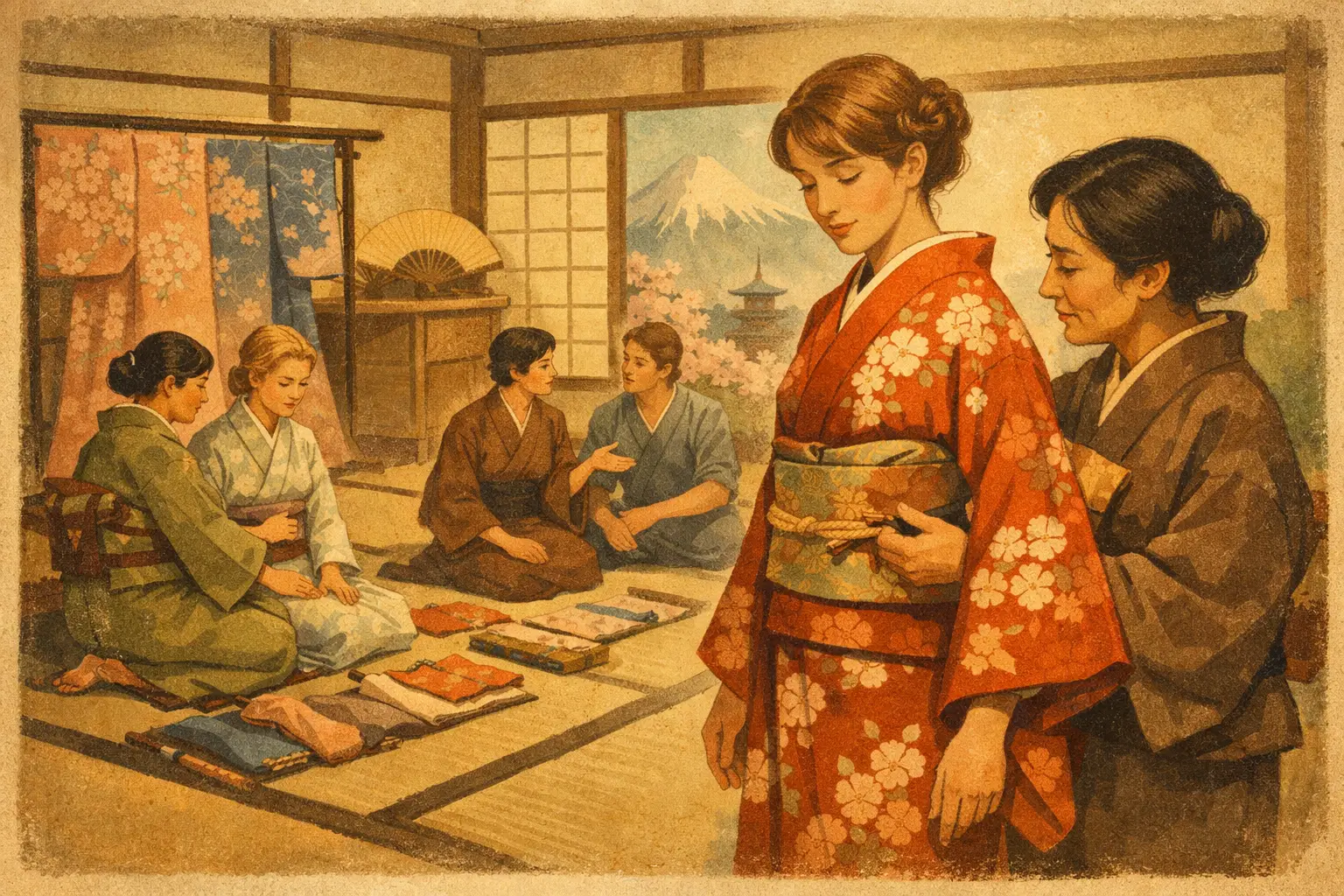
A kimono is never just a beautiful garment on a hanger. The fold of the collar, the weight of the obi, the seasonal pattern on the fabric – each detail carries a story. If you are wondering how to book a kimono workshop for an upcoming Japan trip, the best first step is deciding what kind of experience you truly want. A dressing lesson, a textile-dyeing class, and a full kimono-making workshop can all sound similar in a listing, but they create very different days.
For Japan lovers worldwide, a workshop is a chance to move beyond taking photos in a historic district. You can learn why a kimono is worn in a particular way, make something with your own hands, and come away with a memory that feels much closer to the spirit of Japanese craft.
Choose the Kind of Kimono Workshop You Want
Start by reading the activity description carefully. The word “kimono workshop” can cover a broad range of experiences, from a 30-minute introduction to a multi-day craft course.
A kimono dressing workshop is usually the most accessible option for travelers. You will learn the basic order of layers, how an obi is shaped and tied, and how posture changes when wearing kimono. Some sessions include a walk through a nearby neighborhood or a photo opportunity afterward. These are especially popular in Kyoto, Kanazawa, Tokyo, and towns with preserved historical streets.
A kimono textile workshop focuses on the cloth itself. Depending on the region and studio, you may try yuzen-style fabric painting, shibori tie-dyeing, katazome stencil dyeing, indigo dyeing, or silk weaving. You may make a small scarf, handkerchief, pouch, or fabric panel rather than an entire kimono. That is not a lesser experience. It is often the most realistic way to understand the work and patience behind traditional clothing.
A kimono-making class is the rarest and most demanding category. Sewing a kimono requires precision, specialized knowledge, and considerable time. Short classes might teach one element, such as hand-stitching or preparing a small accessory. If a listing promises that you will make a complete kimono in a couple of hours, read the details closely. You may be assembling pre-cut pieces, making a simplified garment, or working on a miniature version.
Where to Find an Authentic Class
The easiest places to locate workshops are local craft studios, cultural centers, kimono rental shops that also teach dressing, hotel concierge desks, and Japan-focused activity booking services. Search using the city plus the craft you want, rather than relying only on “kimono workshop.” Try terms such as “Kyoto yuzen dyeing,” “Kanazawa kimono dressing lesson,” or “Tokyo shibori workshop.”
Region matters. Kyoto is a strong choice for kimono dressing and yuzen-inspired textile experiences because of its deep connection to silk, artisans, and formal kimono culture. Kanazawa is well known for traditional crafts and refined aesthetics. In smaller cities, you may find more intimate studios where the instructor is the artisan rather than a large tourism operator.
Neither setting is automatically better. A polished city workshop may offer clear English instructions, easy online booking, and reliable schedules. A small studio can feel more personal and may offer deeper conversation, but availability may be limited and communication may require patience or a translation app. Choose based on the experience you value, not just the number of perfect photos in the listing.
Signs a Workshop Is Worth Booking
Look for descriptions that clearly state the activity length, what you will make or learn, language support, group size, and what is included in the fee. Good listings also explain whether you can take home your finished item, whether it needs to dry or be shipped later, and whether the workshop is suitable for beginners.
Photos should show the actual studio, materials, and process, not only people posing in kimono outdoors. Reviews are helpful when they mention the instructor by name, explain what happened during the class, or describe how the host assisted non-Japanese speakers. Be cautious with vague descriptions that promise an “authentic experience” without explaining the craft.
Authenticity is not about being remote or difficult to access. An English-friendly instructor can still be a serious practitioner. What matters is whether the class treats the craft with care and gives you a real connection to the people, tools, and traditions behind it.
How to Book a Kimono Workshop Without Surprises
Once you have found a workshop that fits your interests, reserve it before finalizing the rest of your day. Popular classes can fill up weeks ahead during cherry blossom season, fall foliage season, Golden Week, and the year-end holidays. For a private lesson, a small artisan studio, or a class requiring a specific size range, booking one to three months ahead is a smart target.
Before paying, check the start time and location with special care. Many workshops begin promptly, and a late arrival may cut into your hands-on time. Save the address in both English and Japanese if possible, then allow extra time for train transfers and finding the entrance. Studios are sometimes located in traditional homes or small side streets rather than obvious storefronts.
Also check the cancellation policy. Weather generally will not stop an indoor dyeing or dressing class, but travel plans can change. If you are booking from the United States, confirm the date and time in Japan Standard Time, not your home time zone. It sounds obvious, yet time-zone mistakes are one of the least romantic ways to miss a long-awaited craft experience.
When the booking form has a notes field, use it. Mention dietary requirements only if food is included, but always share relevant mobility needs, pregnancy, allergies to dyes or fragrances, and whether you need language assistance. For kimono dressing, share your approximate height and standard clothing size if requested. This helps the studio prepare suitable garments and avoids awkward surprises on arrival.
What to Wear and Bring
For a dressing workshop, wear simple undergarments and avoid bulky layers. A low-neck camisole and leggings or fitted shorts are usually practical, though the studio may give specific instructions. Skip large jewelry, thick hoodies, and elaborate hairstyles unless you know they work with the experience. Kimono dressing relies on smooth layers, and comfort matters more than arriving in a fashion statement.
For dyeing or painting, wear clothes you do not mind getting marked. Even careful studios can have a stray drop of indigo or pigment. Tie back long hair, bring glasses if you need them for detailed work, and keep a small water bottle handy if the session is long.
Most workshops provide materials, but do not assume. Confirm whether the fee includes the kimono rental, obi, socks, hair styling, fabric item, packaging, and shipping. A low entry price can be appealing, but add-ons may change the total considerably. On the other hand, a higher-priced small-group workshop may include individual guidance that makes the day far more rewarding.
Enjoy the Lesson With Respect, Not Fear
Many first-time visitors worry about making a cultural mistake. A little nervousness is understandable, but you do not need to be an expert to participate respectfully. Listen to the instructor, handle tools and garments gently, and ask before taking close-up photos of people or workspaces. If you are wearing kimono outdoors, follow the studio’s advice on walking, sitting, and using restrooms. The clothes are designed for movement, but they do ask you to slow down.
That slower pace is part of the pleasure. Kimono culture can invite a feeling close to mono no aware – an appreciation for the passing moment. Notice the sound of fabric, the handwork in an obi, and the way a seasonal motif changes how you see a street, garden, or temple gate.
If you do not speak Japanese, learn a few small phrases. “Arigato gozaimasu” goes a long way, and “suteki” is a warm way to say something is lovely. Your instructor will likely be happy to see genuine curiosity, especially when it is directed toward the craft rather than just the costume.
Make the Experience Part of Your Japan Story
Do not rush from a workshop straight into a packed sightseeing schedule if you can help it. Leave time to look at your finished textile, browse the surrounding neighborhood, or sit down for tea while the details are still fresh. If your workshop creates an item that needs drying or shipping, take a photo of the work in progress and save the receipt or collection instructions.
The best kimono workshop is not necessarily the fanciest one or the most photographed one. It is the one that lets you feel the human rhythm behind Japanese clothing – skill, restraint, color, and a little wabi sabi in the handmade result. Book the class that makes you curious, arrive ready to learn, and let that curiosity travel home with you.