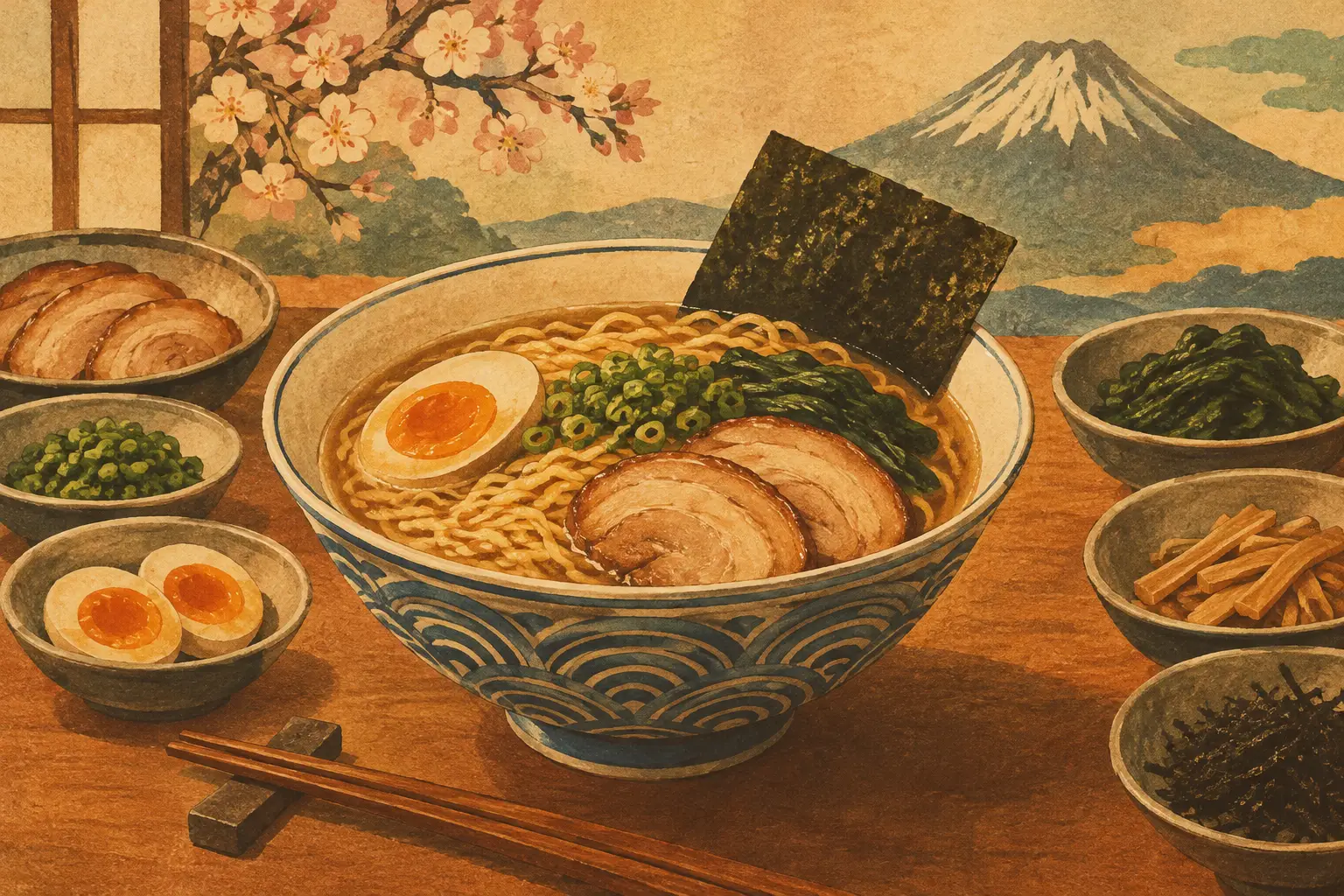
A great ramen shop can ask you a surprisingly big question before you have even sat down: what kind of bowl are you in the mood for? This ramen style guide is for Japan lovers who want to look past the familiar word “ramen” and recognize the personality of each bowl, whether you are at a counter in Tokyo, wandering a Sapporo side street, or cooking from a packet at home.
Ramen is not one fixed recipe. It is a lively meeting point of broth, tare seasoning, noodles, aromatic oil, and toppings. A bowl can be clean and salty, rich and porky, nutty with miso, or intensely seafood-forward. Learning the basic styles makes ordering more fun and helps you follow your own taste rather than choosing only the photo on the vending machine.
Ramen Style Guide: Start With the Broth
The names you see on a ramen menu often describe the tare, the concentrated seasoning that gives the bowl its main direction. Broth matters just as much, but shoyu, shio, miso, and tonkotsu are the four names most useful to know.
Shoyu ramen: savory soy sauce depth
Shoyu ramen is seasoned with soy sauce, creating a broth that is usually brown or amber and fragrant with savory, roasted notes. Many classic Tokyo-style bowls fall into this family. The base may be chicken, pork, seafood, or a blend, so shoyu does not automatically mean heavy.
Choose shoyu when you enjoy balance. It often lets details shine: springy noodles, tender chashu pork, bamboo shoots called menma, and a sheet of nori. A well-made bowl can have real complexity without leaving you overly full. For a first ramen-shop visit in Japan, shoyu is a wonderfully reliable choice.
Shio ramen: clear, delicate, and bright
Shio means salt, and shio ramen is usually the palest of the major styles. That does not mean plain. Its lighter appearance gives chicken, dashi, seafood, and aromatic oils room to speak clearly. You may notice yuzu citrus, scallion, chicken fat, or a subtle ocean-like savoriness.
Shio is an excellent choice for diners who prefer refined flavors over a thick broth. Think of it as the bowl where small changes matter most. A little fragrant oil or a perfectly cooked slice of chicken can change the whole experience. There is a quiet wabi sabi to a clear shio bowl: nothing has to shout to make an impression.
Miso ramen: hearty, nutty, and cold-weather ready
Miso ramen uses fermented soybean paste for a deeper, fuller flavor. It is especially associated with Hokkaido and Sapporo, where a warming bowl makes perfect sense in long winters. The broth is often rich, cloudy, and savory, with notes that can range from sweet and mellow to dark and earthy.
Corn, butter, bean sprouts, ground pork, and cabbage are common companions, though every shop has its own approach. Miso can be a great entry point if you love comfort food, but it is not always the lightest option. If the menu offers white, red, or blended miso, expect white miso to be gentler and red miso to bring a more powerful fermented punch.
Tonkotsu ramen: creamy pork-bone richness
Tonkotsu ramen comes from a pork-bone broth cooked until collagen and marrow give it a pale, creamy body. It is closely linked with Fukuoka and Hakata, though you will find versions throughout Japan and beyond. The flavor is deep, meaty, and wonderfully rich.
Hakata-style tonkotsu usually arrives with thin, straight noodles and slices of chashu, scallions, kikurage wood ear mushrooms, and sometimes pickled ginger. Its signature feature is noodle firmness. You may be asked how firm you want your noodles, from very firm to soft. If you are unsure, regular is a safe choice, while firmer noodles hold up especially well in a hot broth.
Tonkotsu is a bowl to choose when you want full flavor and a satisfying, almost velvety texture. It can feel heavy for some people, especially on a hot day, so a smaller bowl or fewer extra toppings may be the right move.
The Regional Styles Worth Seeking Out
Japan’s ramen culture is regional, personal, and proudly specific. A shop may work from one major style while adding a local ingredient or a house-made technique that makes it unlike any other bowl.
Sapporo ramen is famous for its miso base, while Hakata ramen is known for quick-cooking thin noodles in tonkotsu broth. Kitakata ramen, from Fukushima, often features broad, wavy noodles in a clear pork-and-niboshi, or dried sardine, broth. Tokyo-style ramen commonly brings together soy sauce, chicken, pork, and dashi in a focused, elegant bowl.
You may also encounter tori paitan, a creamy chicken broth that resembles tonkotsu in appearance but has a different, poultry-led flavor. Niboshi ramen highlights dried fish and can be wonderfully intense, while tsukemen serves chilled or warm noodles separately from a concentrated dipping broth. With tsukemen, dip a small bundle of noodles at a time. The sauce is strong by design, not something to drink like a regular soup.
There is no single “most authentic” bowl. Authenticity lives in the care of the shop, the local tradition, and the maker’s point of view. That is part of ramen’s charm: it respects tradition while leaving room for invention.
Noodles, Toppings, and Texture Matter as Much as Soup
A ramen bowl is built on contrasts. Curly noodles pick up broth in their ridges, while straight noodles offer a clean, direct bite. Thick noodles feel substantial and are common in richer broths or tsukemen. Thin noodles cook fast and suit tonkotsu beautifully.
Toppings provide another layer. Chashu may be pork belly, shoulder, or a leaner roast, and its richness can shift the bowl dramatically. Ajitama, the marinated soft-boiled egg, adds a jammy yolk that softens salty or spicy flavors. Negi, or scallions, brings freshness, while nori adds a briny note. Menma offers crunch, and chili oil or spicy bean paste can give a bowl real heat.
Do not assume that “more toppings” always makes a better order. Extra chashu can overpower a delicate shio broth, and butter may be perfect in a bold Hokkaido miso bowl but unnecessary elsewhere. Start with the shop’s standard version when possible. It is the bowl the cook intended you to taste.
How to Order Ramen With Confidence in Japan
Many casual ramen shops use a ticket vending machine near the entrance. Look for the main broth style first, then choose additions such as an egg, extra noodles, or extra pork. If the buttons have only Japanese text, a photo menu, translation app, or a quick “osusume wa nan desu ka?” meaning “What do you recommend?” can help.
At a counter, it is normal to eat at your own pace and focus on the bowl. Slurping noodles is accepted and often practical because it cools them as you eat. You do not need to perform a loud slurp, but there is no need to feel self-conscious about it either.
Try the broth before adding seasonings. Garlic, sesame, pickled ginger, chili oil, and pepper are there to customize your meal, but they can hide the shop’s original balance. Add a little at a time. If you ordered Hakata-style ramen and still have broth left after finishing the noodles, you may be able to request kaedama, an extra portion of noodles.
Find the Bowl That Feels Like You
If you love a clean chicken soup, start with shio or a lighter shoyu. If you want a classic everyday bowl with savory depth, shoyu is hard to beat. Choose miso for warmth, fermented richness, and hearty toppings. Go for tonkotsu when creamy pork flavor and firm thin noodles sound exactly right.
Then allow yourself to be surprised. The bowl you crave after a rainy temple visit may not be the one you want after a summer walk through Kyoto. That shifting appetite is part of the pleasure, a small food version of mono no aware: appreciating the feeling of the moment because it will not come in quite the same way again.
On your next ramen outing, pick one style, taste it before customizing, and remember the detail that stays with you – the noodle texture, the scent of yuzu, the smoky chashu, or the warmth of miso. That is how a simple bowl becomes a Japan memory you can share with fellow fans everywhere.