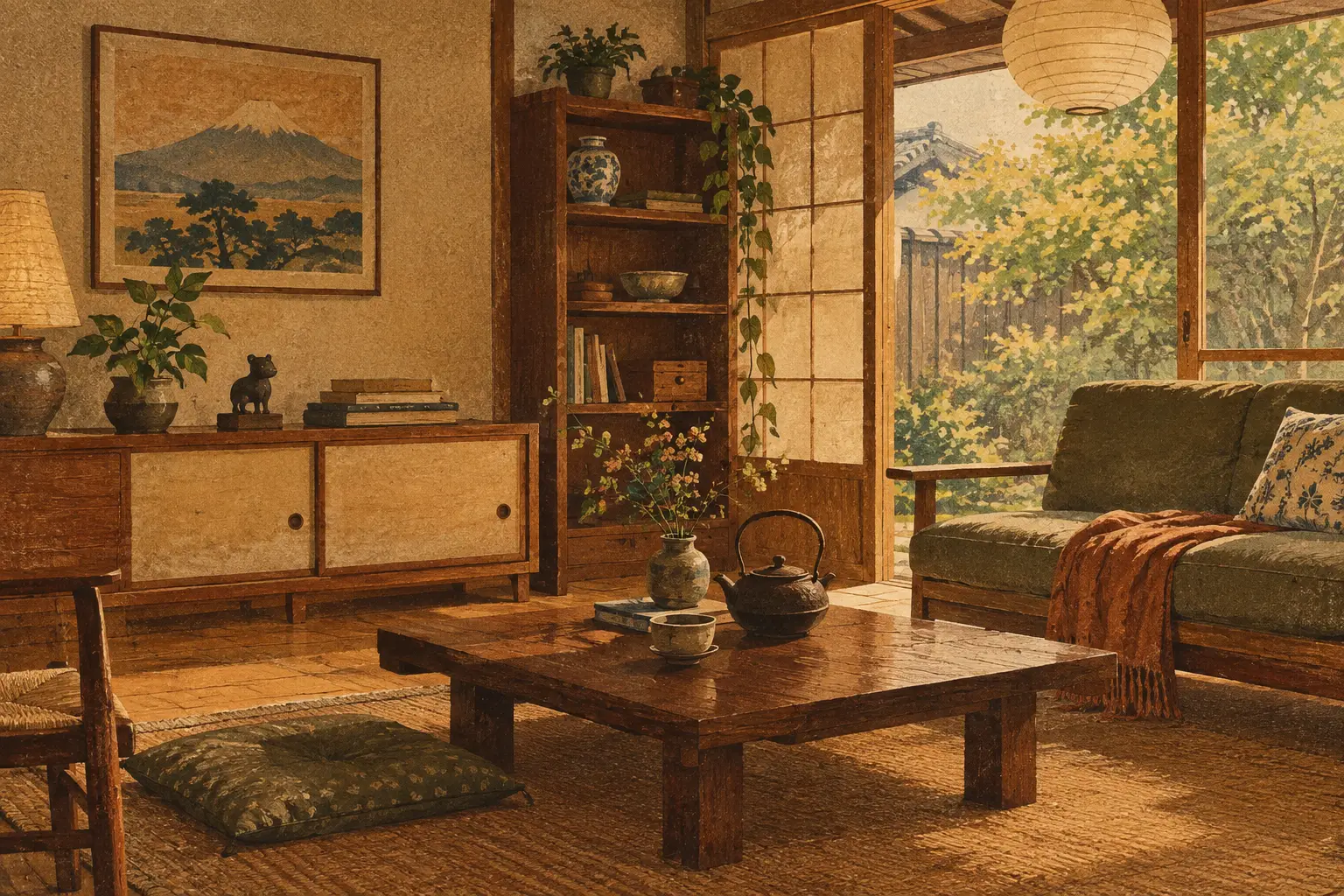
A paper lantern casts a soft pool of light. A handmade tea cup waits on a wooden shelf. There is open space around both of them, and that space is doing real work. This guide to Japanese home decor is not about turning your home into a movie set or buying a room full of matching objects. It is about building a place that feels quieter, more personal, and closer to the parts of Japan you love.
Japanese interiors are wonderfully varied, from compact Tokyo apartments to old machiya townhouses, countryside farmhomes, and boldly designed contemporary spaces. There is no single correct look. Still, many Japanese homes share an attention to proportion, natural texture, useful objects, and the feeling that every item has earned its place. That is the spirit worth bringing home.
A Guide to Japanese Home Decor Starts With Feeling
Before choosing a color or ordering a noren curtain, decide how you want the room to feel. Maybe you want the calm of an onsen ryokan after a long day. Maybe you miss the warm wood and quiet gardens of a Kyoto temple visit. Or perhaps you want your favorite ukiyo-e print, indigo textile, or ceramic bowl to have the setting it deserves.
Start with one mood rather than a shopping list. Japanese design often values restraint, but restraint does not mean emptiness or a lack of personality. It means choosing with care. A room can hold books, travel mementos, family photos, and beloved Japanese crafts without becoming crowded, as long as the pieces have room to be seen.
The useful Japanese concept here is ma, the interval or pause between things. In a home, ma can be the clear section of wall around a print, the uncluttered top of a low cabinet, or the open path between a chair and a window. It lets the eye rest. If your room already feels busy, removing one or two decorative items may make a bigger difference than adding something new.
The Elements That Make a Room Feel Considered
Let natural materials do the talking
Wood, paper, clay, linen, cotton, bamboo, and woven fibers bring warmth without demanding attention. A pale oak side table, a cotton zabuton floor cushion, or a ceramic vase can make a room feel grounded quickly. You do not need to replace every piece of furniture. Start by adding texture where your room currently feels slick, cold, or overly uniform.
This is also where wabi sabi matters. Often misunderstood as simply rustic, wabi sabi is a way of appreciating modesty, imperfection, and the marks of time. Choose a hand-thrown bowl with a slightly uneven rim. Keep the small scratch on a wooden tray. Let a naturally dyed textile fade gently with use. A home feels more inviting when it has a little history, even if that history begins with you.
Choose one craft as the focal point
Rather than scattering many small Japan-themed decorations around a room, give one meaningful piece a place of honor. A framed woodblock print, a piece of shodo calligraphy, a handwoven sakiori textile, or a carefully displayed kimono can become the visual center.
In traditional homes, a tokonoma alcove is a space for seasonal art, flowers, or a scroll. You do not need an alcove to borrow the idea. Clear a shelf, a console table, or a portion of a wall, then rotate what you display. A single seasonal branch in a vase beside a favorite print can feel far more powerful than a shelf packed edge to edge. This small ritual also gives you a reason to enjoy pieces from your collection instead of storing them away forever.
Use light to soften the room
Overhead lighting can make even beautiful decor feel flat. Bring in warm table lamps, paper shades, or lantern-style fixtures to create layers of light. The goal is not to imitate a specific Japanese house exactly. It is to create the gentle, restorative feeling many people remember from ryokan rooms, small restaurants, and evening walks through Japan.
Shoji-inspired screens can be lovely, especially as dividers in a studio or reading corner, but use them thoughtfully. A flimsy screen covered in bright white plastic will not give the same effect as wood framing and textured paper. If an authentic-style screen is beyond your budget, choose a simple fabric curtain or a natural-fiber room divider instead. Good materials matter more than a literal theme.
Keep daily objects beautiful and useful
Japanese home decor shines when it supports everyday life. Put a yunomi tea cup where you actually drink tea. Use a small tray for keys and mail. Keep a woven basket near the sofa for blankets or magazines. A low table can be wonderful for tea, journaling, or sharing snacks, but it may not suit every household, especially if you work from home or have mobility needs.
Function is part of the beauty. That is why a handmade chopstick rest, a well-made incense holder, or a simple tenugui cloth can feel more special than a purely decorative souvenir. Let the objects you use most often carry some of the room’s character.
Build Japanese Home Decor Around What You Already Own
You do not need a full renovation to make a meaningful change. Begin with one area: an entryway, a bedside table, a tea corner, or a reading chair. Clear the surface, then add a natural material, a useful object, and one piece of art or craft. This approach keeps the project affordable and prevents the room from feeling staged.
Color can help tie the space together. Soft neutrals such as rice-paper cream, charcoal, warm gray, and natural wood are easy foundations. Add depth with indigo, moss green, rust, persimmon orange, or the faded pink of cherry blossoms. Keep the palette limited if you want a calm feeling. If your taste is more energetic, let one vivid textile or print carry the color while the larger furniture stays simple.
Plants are another easy bridge. A branch in a tall vase, a small pine, an arrangement of seasonal flowers, or a modest indoor plant can bring in the awareness of changing seasons that appears throughout Japanese art and daily life. You do not need to force a perfect ikebana arrangement. Pay attention to line, space, and the direction each stem naturally wants to take.
Avoid the Theme-Room Trap
The biggest mistake in Japanese-inspired decorating is treating culture as a pile of symbols. A lucky cat, a red fan, a samurai sword replica, bamboo, cherry blossoms, and a torii gate print all in one room can flatten a rich culture into a souvenir shop display. Choose fewer pieces, learn where they come from, and let them have context.
Be especially careful with religious imagery. Shinto and Buddhist objects are not generic accents. If you display a shrine-related item, a temple image, or sacred calligraphy, understand its meaning and place it respectfully. The same goes for antique-looking swords and armor. A well-chosen craft object, artwork, or textile is usually a more natural way to express your connection to Japan.
Also, do not confuse minimalism with discomfort. A Japanese-inspired home can include a plush sofa, a practical desk, and plenty of storage. Adapt the ideas to your real life. The best room is one that supports your routines while giving you a small moment of mono no aware – that tender awareness that beautiful things, seasons, and ordinary days do not last forever.
Tonight, choose one surface in your home and give it some breathing room. Add an object you truly love, make a cup of tea, and sit with the change for a while. That quiet sense of connection is where Japanese home decor becomes more than decor.