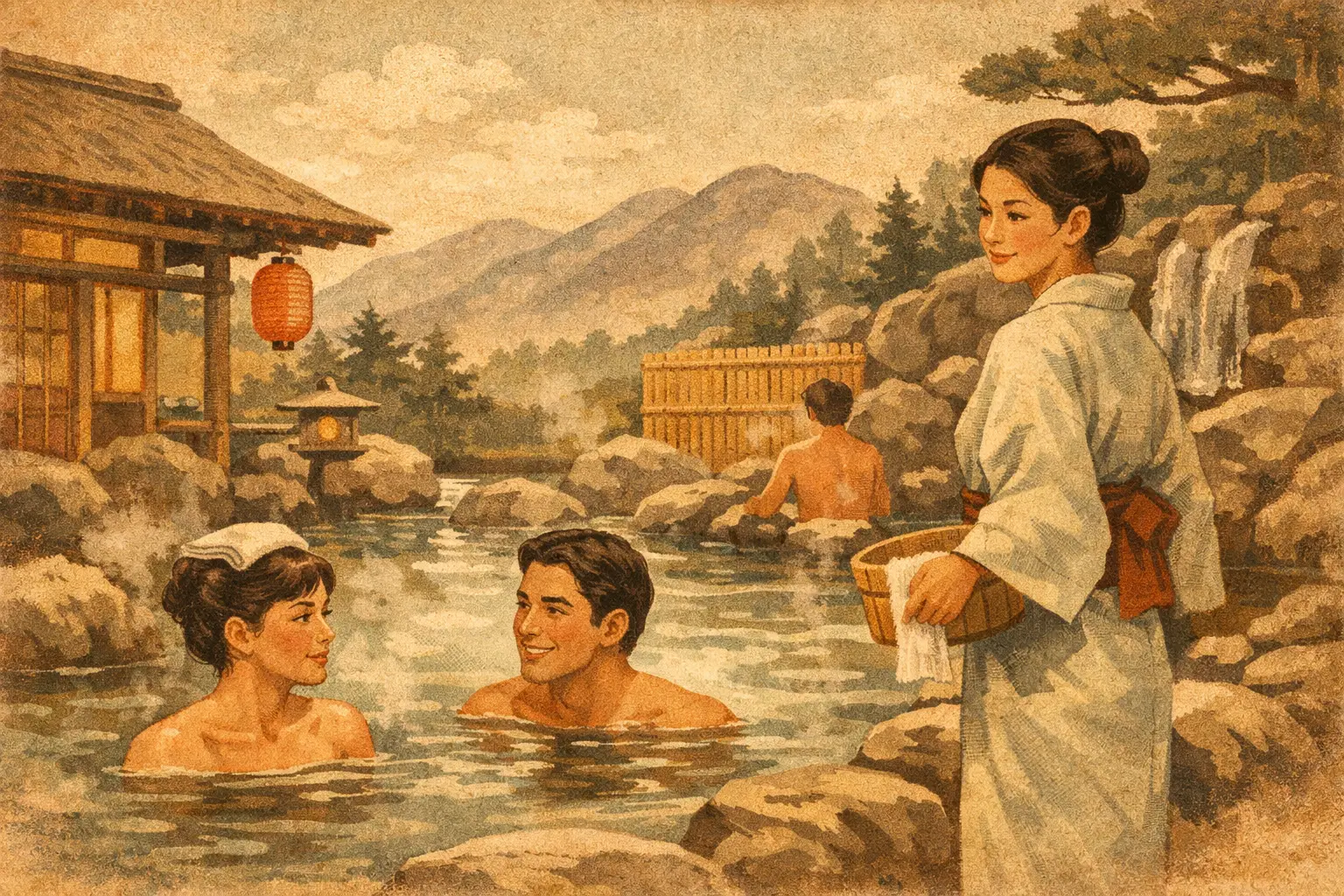
The first surprise when you learn how to visit a Japanese onsen is also the point: the bathing area is usually completely nude. No swimsuit, no rushing, no pretending the rules do not apply. An onsen asks you to slow down, wash carefully, and share a quiet ritual that has been part of Japanese life for centuries. For Japan lovers worldwide, it is one of the most direct, restorative ways to feel close to the country beyond the temples, markets, and train stations.
An onsen is not simply a hot tub with a beautiful view. It is a place where daily life, local geology, and a little bit of wabi sabi meet. Steam rises from mineral-rich water, wooden buckets knock gently against tile, and strangers give one another space without making the silence awkward. Once you understand the rhythm, the experience is wonderfully simple.
How to Visit a Japanese Onsen: Know What You Are Entering
An onsen uses naturally heated water from volcanic hot springs. Japan has thousands of them, from large resort towns such as Hakone and Beppu to small mountain villages and remote ryokan inns. The water may smell faintly of sulfur, iron, or minerals, and its color can range from clear to milky white or pale blue. Those differences are part of the charm, not a warning sign.
You will also see the word sento. A sento is a public bathhouse, traditionally supplied by regular heated water rather than a natural hot spring. The bathing etiquette is nearly identical, so a sento can be a great low-pressure introduction if you are staying in a city.
Most public baths have separate areas for men and women, marked with curtains called noren. Blue and red are common color cues, but do not rely on color alone. Look for the kanji: 男 for men and 女 for women. Some facilities change sides during the day, so check the sign rather than assuming you have found the same entrance as yesterday.
Before You Go: Choose the Right Kind of Bath
Your first onsen does not need to be a famous, crowded destination. In fact, a smaller facility or a ryokan with a calm bathing area can make the etiquette feel much easier to follow. Day-use onsen let visitors pay an admission fee and bathe without staying overnight, while a ryokan stay often includes access to indoor and open-air baths.
If privacy would help you relax, look for a kashikiri-buro, a reservable private bath. Some are attached to a guest room, while others are booked in timed slots. These are especially useful for couples, families with children, first-time visitors, and travelers with tattoos who do not want to navigate a public-bath policy.
Tattoo policies vary widely. Tattoos have historical associations with organized crime in Japan, and some traditional facilities still refuse entry to guests with visible tattoos. Other onsen welcome tattooed visitors, allow small tattoos to be covered with a patch, or offer private baths. Do not take a refusal personally. Check the facility rules before you arrive, and choose an onsen that clearly works for you.
Also consider the water temperature. Many baths are between 100 and 108°F, and some can feel much hotter. If you dislike heat, seek a facility with several pools, an outdoor rotenburo, or a cool-down area. The goal is comfort, not endurance.
What to Bring and What to Leave Behind
Most onsen provide or rent the essentials. You generally need a large towel for drying and a small wash towel. At a ryokan, these may be in your room; at a public bathhouse, they may cost a small extra fee. Bring a change of clothes, and consider bringing a hair tie if you have long hair.
Leave jewelry, watches, and valuables in a locker. Mineral water can tarnish certain metals, and it is easier to relax when you are not worried about your belongings. Many facilities provide shampoo, conditioner, body wash, hair dryers, and skincare basics, but a very local bathhouse may be more minimal.
Your phone should stay in the locker. Photography in changing rooms and bathing spaces is never appropriate, even if the bath looks like the most beautiful scene of your trip. The memory is yours. Let it stay that way.
The Onsen Routine, Step by Step
Start at the entrance by removing your shoes. Store them in the shoe locker or place them on the designated shelf. Pay your entrance fee, collect any towels, and head into the correct changing room.
Inside, undress completely and place your clothes in a locker or basket. Yes, completely. In a public onsen, swimsuits and underwear are not worn in the bath. It can feel exposing for the first minute, particularly for travelers from the United States, but no one is studying you. People are focused on washing, soaking, and enjoying their own quiet time.
Carry only your small wash towel into the bathing area. Before entering any shared bath, wash your body at a shower station. Sit on the low stool, rinse yourself, use soap and shampoo, and rinse again thoroughly. Think of the bath as clean water for soaking, not a place to get clean.
Once you are fully rinsed, approach the bath slowly. Test the water with a foot or hand, then ease in. Avoid splashing, swimming, or loud conversation. Your small towel should not touch the water. Most bathers fold it and place it on the edge of the bath or, in the classic onsen image, balance it on their head.
Soak for a few minutes, then step out and cool down. You can repeat this cycle, trying different pools if available. An outdoor rotenburo can be especially magical in cool weather: cedar scent in the air, mountains in the distance, and a sense of mono no aware as the steam drifts through a changing sky.
When you finish, dry off lightly with the small towel before returning to the changing room. This keeps the floor dry for everyone. Then use your large towel, get dressed, drink water, and give yourself a few quiet minutes before charging off to your next sightseeing stop.
Small Etiquette Details That Make a Big Difference
Japanese bathing culture is built around consideration. You do not need perfect Japanese or years of experience to show that consideration. Keep your voice low, rinse your stool and wash basin after using them, and make sure long hair stays out of the water. If you bring a child, stay attentive and help them follow the same rules.
Do not shave, brush your teeth, wash clothing, or rinse a towel in the communal bath. These actions may be normal in some locker-room settings elsewhere, but they do not belong in an onsen. Likewise, skip the dramatic cannonball entrance. The calm atmosphere is part of what people come for.
If you are unsure what to do, observe quietly. Onsen etiquette is less about memorizing a long list than noticing the shared flow of the room. That sensitivity to place and other people is something you will recognize across Japan, from tea rooms to shrine paths.
Health, Comfort, and Common-Sense Choices
Hot mineral water can be intense. Avoid bathing when you are dehydrated, heavily intoxicated, or feeling unwell. Drink water before and after, enter gradually, and get out if you feel dizzy, nauseated, or overheated. Pregnant travelers and people with heart conditions, blood pressure concerns, or other health questions should ask a medical professional before using very hot baths.
Eating a huge meal right before soaking is not ideal, either. Give yourself some time after dinner, especially if you plan to use a hot outdoor bath. At a ryokan, an evening soak followed by a light stroll in yukata can be one of the most memorable parts of the stay, but listen to your body rather than treating it as a cultural challenge to complete.
Menstruating travelers should follow the facility’s policies and use a private bath if possible. Public bathing spaces are shared environments, and comfort and hygiene matter for everyone.
Let the Onsen Be Part of the Journey
A Japanese onsen is not an attraction to rush through for a photo or a checklist. It is a pause in the middle of travel, when tired feet, crowded trains, and packed itineraries finally fall away. You may enter feeling self-conscious about the rules and leave wondering why every trip does not include an hour of warm water, mountain air, and blessed silence.
Bring curiosity, respect the routine, and allow yourself to be a beginner. The best onsen moment often comes after you have stopped trying to do it perfectly: you are warm, clean, unhurried, and quietly grateful to be there.