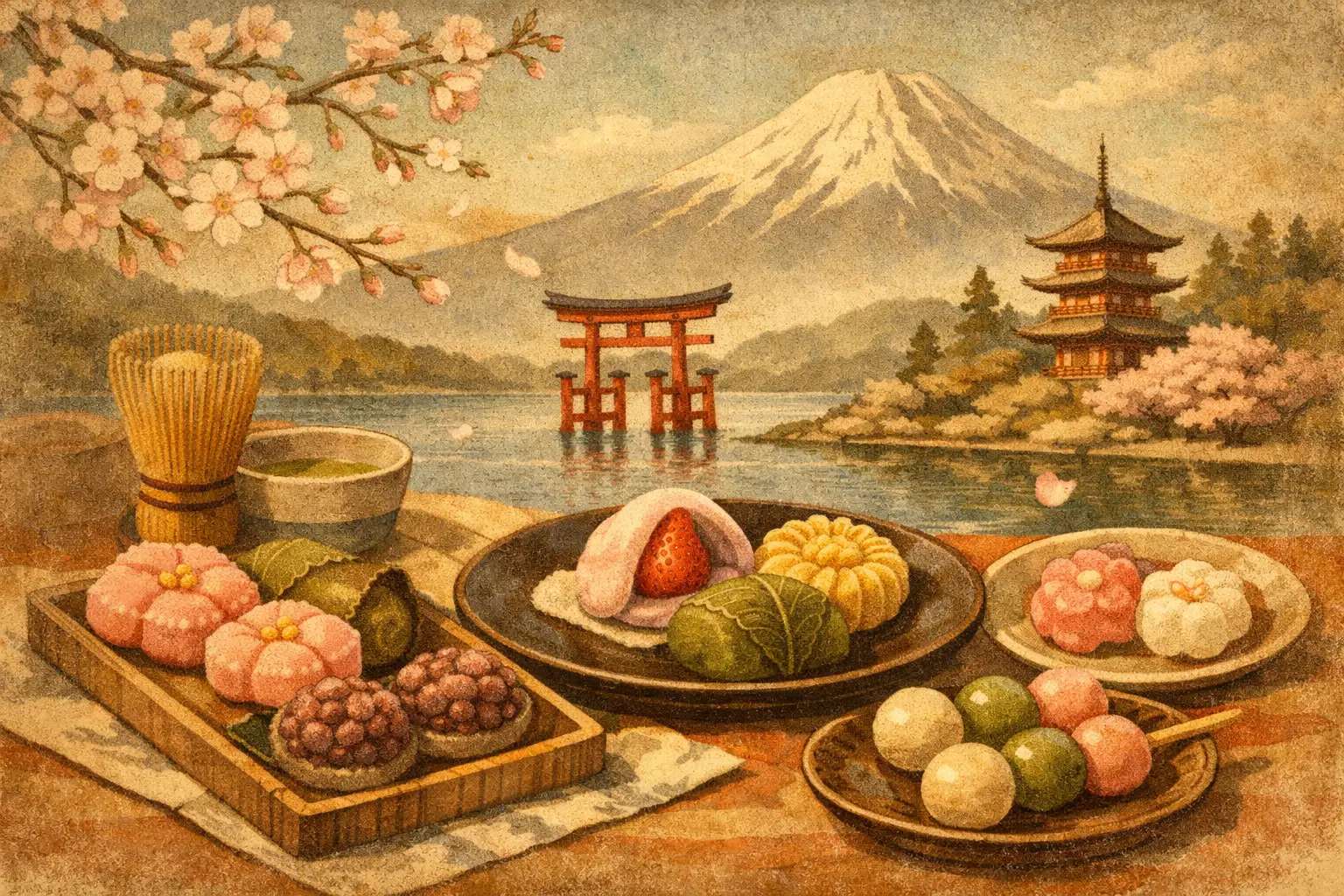
A pale pink sweet shaped like a cherry blossom, a clear jelly that seems to hold a river current, a chestnut cake wrapped in a leaf: this seasonal wagashi guide is an invitation to taste Japan’s calendar. Wagashi are traditional Japanese confections, often enjoyed with green tea, but they are also tiny edible scenes. A good one tells you what is blooming, ripening, falling, or quietly waiting beneath snow.
For Japan lovers worldwide, wagashi offer a beautiful way to notice the details that make each season feel distinct. They carry mono no aware, the gentle awareness that a fleeting moment is precious. The exact sweet changes from shop to shop and region to region, which is part of the joy. Rather than hunting for one definitive version, learn the seasonal language and taste with curiosity.
How to Use This Seasonal Wagashi Guide
Wagashi are not one single thing. The word covers many styles, from chewy mochi and bean-paste-filled buns to refined, sculpted sweets served at tea gatherings. Most rely on ingredients such as sweet azuki bean paste, rice flour, wheat flour, agar, sesame, chestnuts, and seasonal fruit. Their sweetness is usually measured rather than loud, because a sip of matcha or sencha is meant to complete the experience.
When you visit a wagashi shop, look first at the display. The colors, shapes, and names often reveal the season before you read a label. A flower, bird, moon, dew drop, or drifting leaf can be as meaningful as the ingredients. If you are buying a gift, ask how long the sweet keeps. Fresh namagashi may be best on the day of purchase, while yokan and some baked wagashi travel far more easily.
At home, serve one or two pieces on a small plate with unsweetened green tea. Take a moment before the first bite. That small pause is not a rule you have to get right. It is simply a chance to see the craft: the fine lines in the dough, the translucent agar, the deliberate curve of a petal.
Spring Wagashi: Sakura, Herbs, and New Beginnings
Spring is when wagashi displays become especially photogenic. Sakura season brings sakuramochi, a pink rice sweet filled with bean paste and wrapped in a salted cherry leaf. The leaf is edible, though whether you eat it is personal preference. Eating it gives the sweet a fragrant, slightly salty edge; setting it aside lets the soft rice and bean paste stand on their own.
You may encounter two major sakuramochi styles. In the Kanto region around Tokyo, the outer layer is often a thin, crepe-like wheat flour cake. In Kansai, it is more commonly made with coarse, textured rice. Neither is the “correct” choice. The contrast is a delicious reminder that Japanese tradition is regional, not uniform.
Look for kusamochi as well. This green mochi is flavored with yomogi, or Japanese mugwort, and usually contains sweet bean paste. Its grassy, herbal character feels like the first walk through a garden after winter. Another spring favorite is hanami dango, three rice dumplings on a skewer, often pink, white, and green. It is simple, cheerful, and made for cherry-blossom viewing.
Spring wagashi often favor tender colors and floral motifs, but the best pieces avoid being merely cute. Their appeal lies in restraint. A single cherry petal or a hint of leaf-green can say more than a heavily decorated dessert ever could.
Summer Wagashi: Coolness You Can See
Japan’s hot, humid summer calls for sweets that look refreshing before they even reach your mouth. Mizuyokan, a soft chilled jelly made with agar, sugar, and bean paste, is one of the season’s great pleasures. It has a clean, smooth texture and is usually cut into neat blocks. Keep it cool, but do not freeze it, or its texture can suffer.
For a true summer spectacle, find kingyokukan. This clear agar jelly may contain red-and-white shapes resembling goldfish, or seasonal imagery such as maple leaves floating in water. It is a small piece of edible ukiyoe, designed to create the sensation of cool water on a sweltering afternoon.
Warabimochi is another warm-weather favorite. Despite its name, most modern versions are made with starch rather than true bracken fern starch. The soft, bouncy pieces are often dusted with kinako, roasted soybean flour, and served with kuromitsu, a dark brown sugar syrup. The flavor is gentle and nutty, not intensely sweet.
Summer is also the season to appreciate a wagashi shop’s sense of wabi sabi. A clear jelly may contain a tiny bubble. A handmade sweet may not be perfectly identical to its neighbor. Those marks are not failures. They are evidence that a human made something meant to be enjoyed now, before the heat and the season pass.
Autumn Wagashi: Chestnuts, Persimmons, and the Moon
Autumn brings richer colors and earthier ingredients. Chestnut wagashi are everywhere, especially kuri kinton, a golden confection made from sweetened chestnut and bean paste. It may be shaped into a small mound that resembles a chestnut burr or simply celebrated for its deep, mellow flavor.
You may also see sweets flavored with sweet potato, persimmon, sesame, or roasted tea. These are cozy flavors, but wagashi usually keep them elegant. Instead of a heavy pie-like dessert, expect subtle sweetness and a texture that lets the ingredient speak.
The moon-viewing festival, tsukimi, inspires round white dumplings called tsukimi dango. Their shape recalls the full moon, while displays may include pampas grass and autumnal flowers. A moon-themed wagashi makes a wonderful companion to an evening walk, whether you are in Japan or looking up from your own backyard.
Autumn is perhaps the easiest season for first-time wagashi fans, especially if you already love chestnuts and roasted flavors. Still, do not skip the lighter pieces. A delicate nerikiri shaped like a maple leaf can capture the season as vividly as any pumpkin-spiced treat, without copying familiar American dessert expectations.
Winter Wagashi: Warm Tea and Quiet Celebration
Winter wagashi lean into warmth, good fortune, and the rituals of the New Year. Daifuku, soft mochi wrapped around sweet bean paste, is available year-round but feels especially comforting in cold weather. Some versions include whole strawberries, chestnut pieces, or a lightly salted bean paste. Because fresh mochi firms up quickly, enjoy it soon after buying it.
For a more substantial winter sweet, try dorayaki. Two soft, pancake-like cakes sandwich a layer of azuki bean paste. It is less formal than a highly sculpted tea sweet and wonderfully approachable for sharing. If someone in your group thinks they do not like bean paste, dorayaki can be a friendly place to start.
New Year brings celebratory motifs: pine, bamboo, plum blossoms, cranes, and the first sunrise. Plum blossom wagashi appear before spring because ume blooms in late winter, carrying a message of endurance and renewal. This is one of the most lovely lessons in seasonal Japanese culture: the calendar is not a rigid set of dates. It follows weather, plants, festivals, and anticipation.
Ordering, Eating, and Sharing Wagashi Well
If you are in Japan, independent wagashi shops are worth seeking out, especially in older shopping streets, temple towns, and regional cities. Department store food halls are also excellent for comparing respected makers in one place. Be mindful that many sweets contain gluten, eggs, dairy, or gelatin, even when the traditional base appears plant-based. Ask clearly if you have an allergy or dietary restriction.
If you are buying wagashi outside Japan, start with shelf-stable options such as yokan, monaka wafers filled with bean paste, or packaged dorayaki. They will not replicate the thrill of a just-made namagashi from a Kyoto confectioner, but they are a real entry point. Pair them with Japanese tea, invite a friend over, and compare what each of you notices.
The best wagashi habit is simple: let the season choose for you. When the shop window shifts from sakura to hydrangea, chestnuts to plum blossoms, follow along. One small sweet can make a regular afternoon feel closer to Japan, and give you a new reason to look carefully at the season outside your own window.