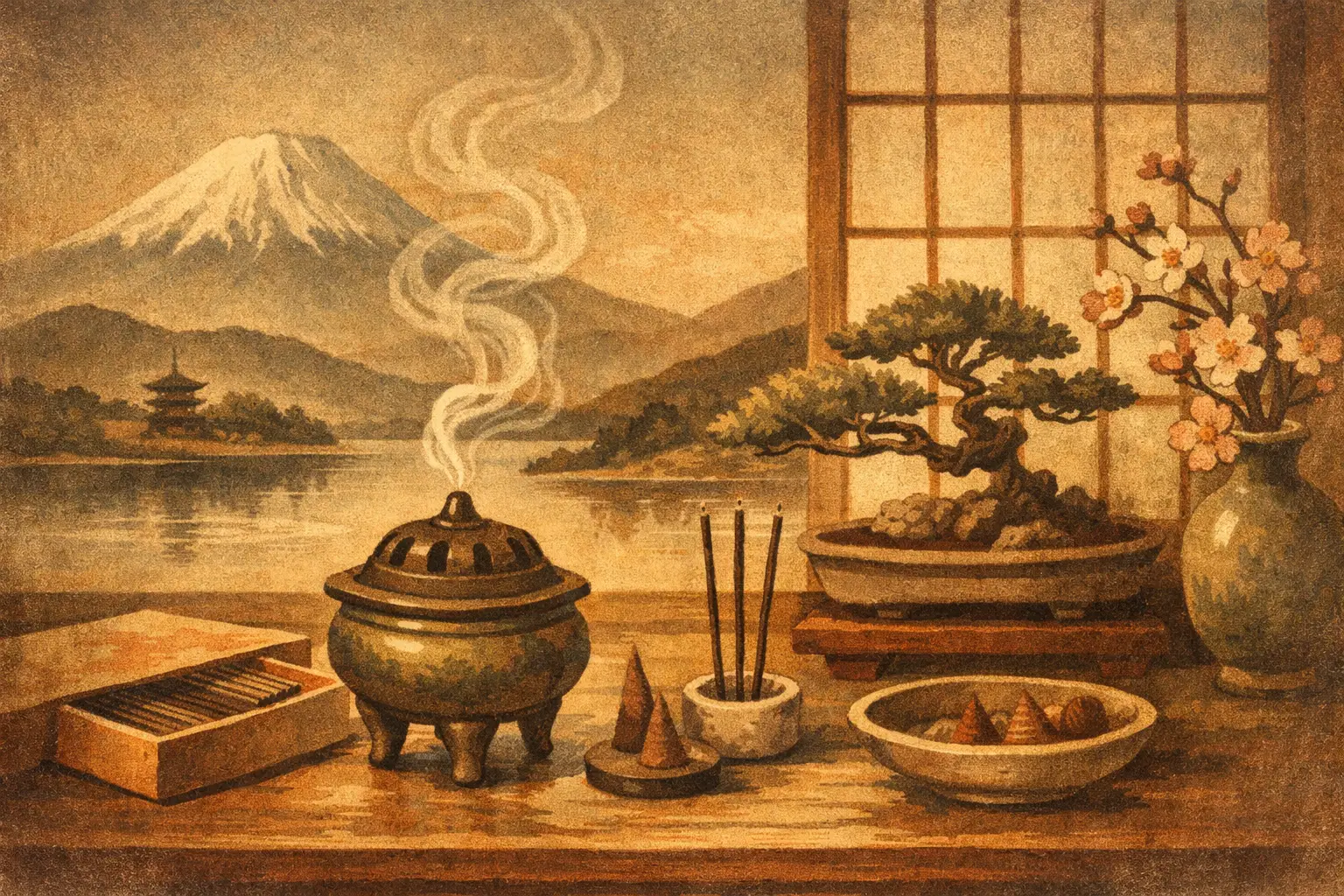
A stick of Japanese incense can change the feeling of a room before the smoke has even faded. It may bring back a quiet temple corridor in Kyoto, a cedar-lined trail near Kumano, or the thoughtful stillness of a tea room. This guide to buying Japanese incense will help you find a scent that feels personal, understand what you are buying, and begin a ritual that fits real life at home.
Japanese incense is not only for formal meditation or special occasions. A single stick before reading, after cleaning, while writing a letter, or when you want a few peaceful minutes can become a small connection to Japan. That is part of its appeal for Japan lovers worldwide: it is beautiful, useful, and deeply rooted in everyday cultural practice.
What makes Japanese incense different?
Most Japanese incense is made with finely ground natural materials, aromatic woods, herbs, resins, spices, and a plant-based binder. Many Japanese-style sticks have no bamboo core, so the fragrance is often cleaner and less woody than the familiar Indian-style incense stick. They are also usually thinner, shorter, and designed to scent a smaller space without taking over the room.
The experience tends to be refined rather than loud. Instead of a powerful perfume cloud, you may notice a soft progression: a dry woody opening, a warm spice in the middle, then a lingering sweetness. This sensitivity to passing fragrance has something in common with mono no aware, an appreciation of fleeting beauty. The scent is there, then gone. That temporary quality is part of the ritual.
There is still plenty of variety. Some Japanese incense is bright and floral, some smells like old temple wood, and some is rich with precious aromatic woods. Do not assume that all Japanese incense smells “traditional” in one specific way.
Guide to buying Japanese incense: start with your scent family
The easiest way to make a good first purchase is to choose by mood, not by a romantic-sounding product name. Incense names can be poetic, which is lovely, but they do not always tell you whether a fragrance is light, sweet, smoky, or deep.
For a calm, clean room
Look for sandalwood, white sandalwood, hinoki cypress, pine, or gentle herbal blends. Sandalwood is warm, creamy, and quietly sweet. Hinoki has a fresh, dry, forest-like character that many travelers associate with shrines, baths, and traditional architecture. These are excellent choices for morning quiet time, yoga, journaling, or post-shower relaxation.
For flowers without a perfume-counter feeling
Try cherry blossom, plum, lotus, jasmine, or a soft floral blend. Japanese floral incense is often more restrained than a typical scented candle. Cherry blossom incense, for example, may be powdery, airy, or lightly sweet rather than smelling like literal blossoms. It depends heavily on the maker and the supporting woods in the blend.
For temple atmosphere and deeper reflection
Choose aloeswood, agarwood, sandalwood blends, patchouli, clove, or frankincense. These scents can feel darker, resinous, peppery, and more contemplative. They suit evenings, rainy days, tea, or a moment when you want the room to feel grounded.
Aloeswood is especially worth understanding. It is an aromatic resinous wood prized in Japanese incense culture, known through the art of listening to incense, called kodo. Genuine high-grade aloeswood is rare and expensive, so an affordable incense labeled aloeswood is usually a blend inspired by its character. That is not a bad thing. It simply means you should enjoy it as a composed fragrance, not expect a piece of rare wood in every stick.
For a warm, welcoming home
Vanilla, amber, cinnamon, benzoin, and sweet spice blends can feel cozy, especially in cooler weather. They are often friendlier to beginners because the notes are familiar. The trade-off is that sweeter blends may feel stronger in a small apartment. Burn them for a shorter time or choose a lighter version if you are scent-sensitive.
Choose the right format before you buy
Japanese incense comes in more than standard sticks, and the format changes the experience.
Stick incense, often called senko, is the easiest place to start. It is affordable, simple to light, and available in countless fragrances. Short sticks may burn for around 15 to 20 minutes, while longer ones can last 30 minutes or more. If you live in a small space, short sticks give you more control.
Cone incense produces a fuller, more immediate scent. It can be wonderful in a larger room, but it may be too intense for a desk or bedroom. Coils burn longer and are useful for a slow afternoon at home, though they need a heat-safe holder with a broad ash-catching surface.
For a slower, smokeless path, consider kneaded incense, or neriko. It is traditionally warmed rather than burned, often over ash and charcoal in a dedicated incense ceremony setup. This is a beautiful next step for collectors and lovers of kodo, but it is not necessary for a first purchase. Start with sticks and let your curiosity lead from there.
Read the package with a little skepticism
Beautiful packaging is part of the pleasure, especially when you are buying a Japanese craft item for yourself or as a gift. Still, a few details matter more than the box.
First, look for the burn time, number of sticks, and whether the incense has a bamboo core. A package that looks generous may contain only a small number of long sticks, while a compact box may offer a month of daily use. Also check whether a holder is included. Many boxes are sold without one.
Second, notice the fragrance description. Terms such as natural, traditional, and temple do not have one fixed standard. A dependable retailer should describe the main scent notes and identify the maker. If the listing only says that the incense is “Japanese-inspired” without naming a Japanese producer or providing useful details, you may be looking at a different style of product.
Third, do not chase the most expensive option right away. Incense is personal. A respected maker may produce a scent that your best friend adores but that feels too powdery, sweet, or smoky to you. Sample sets, small boxes, and shorter sticks are smarter than committing to a large bundle before you know your preferences.
Makers worth knowing
Japan has long-established incense houses, particularly in places such as Kyoto, Sakai, and Awaji Island. You do not need to memorize every name, but recognizing a few can make shopping feel less mysterious.
Shoyeido is widely loved for accessible blends as well as more traditional offerings. Nippon Kodo has a broad range, including easy-to-find everyday fragrances. Baieido is known for wood-focused, classic styles that appeal to people seeking a quieter, more traditional profile. Kunjudo and Gyokushodo are also respected names with distinct approaches, from approachable florals to complex aromatic woods.
Within any one maker, the price range can be huge. Entry-level incense often uses fragrance compositions and accessible ingredients. Higher lines may feature more natural aromatics, more nuanced blending, or rarer woods. Neither category is automatically better for your home. Think of it like tea: a rare ceremonial tea can be extraordinary, but a good daily tea may be what you reach for most.
Make your first burn a good one
Use a stable, heat-safe incense holder and place it on a nonflammable surface, away from curtains, books, pets, and drafts. Light the tip, let the flame catch for a few seconds, then gently blow it out so the end glows. The stick should smolder, not flame.
Ventilation matters. Open a window slightly, especially when trying a new scent. Japanese incense is often lower-smoke than other styles, but lower smoke does not mean no smoke. If you have asthma, scent sensitivities, pets, or very young children at home, use extra caution, burn for shorter periods, and avoid treating incense as an air freshener.
You do not have to burn a whole stick. Many people extinguish one after five or ten minutes once the room is lightly scented. A small dish of sand or a purpose-made holder makes this easier. This approach also lets you enjoy finer incense without using it too quickly.
Build a scent ritual that feels like you
There is no requirement to turn incense into a performance. You can pair hinoki with a bath, light a floral stick while arranging an ikebana-inspired bouquet, or use sandalwood before opening a book on ukiyo-e. Keep a simple note on your phone with scents you loved, the time of day, and how they made the room feel. Soon, you will notice your own preferences.
That is the real joy of Japanese incense: not finding the one “correct” fragrance, but creating a small, repeatable moment of wabi sabi in an ordinary day. Choose a modest first box, make space for the scent to speak softly, and let your collection grow only when a fragrance gives you a reason to return.