You are standing in the changing room with a tiny towel in your hand, trying not to look like the one foreigner who missed the memo. That is exactly why onsen vs sento etiquette matters. The good news is that the basics are shared, and once you understand the rhythm, Japanese bathing starts to feel less intimidating and much more like one of the most peaceful parts of a trip.
For all Japan lovers worldwide, this is one of those cultural experiences that goes far beyond checking off a tourist activity. A good soak can feel almost meditative, a little like mono no aware in warm water – quiet, fleeting, and deeply human. But onsen and sento are not quite the same thing, and the differences affect how you should read the room.
Onsen vs sento etiquette: the big picture
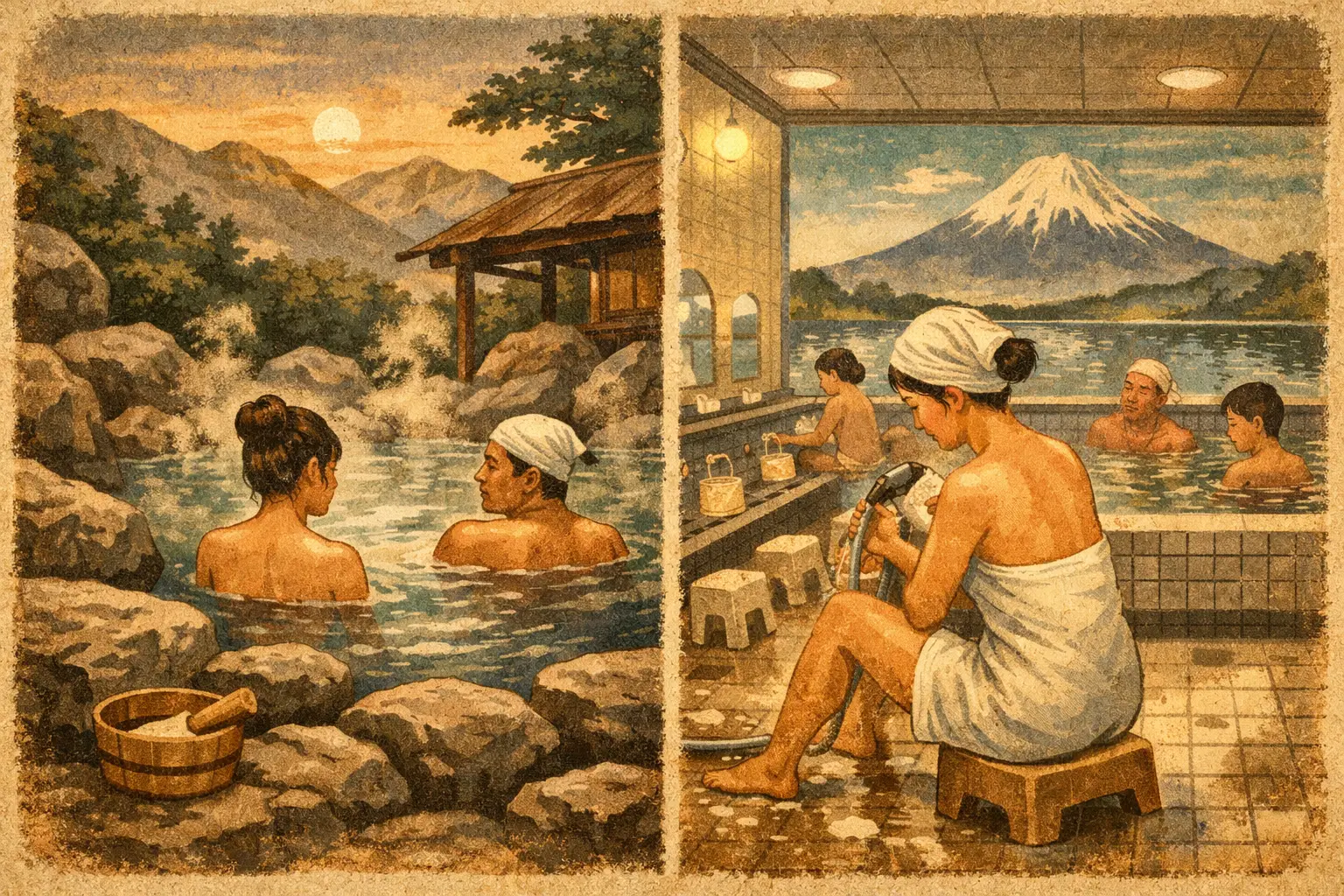
The biggest distinction is simple. An onsen uses natural hot spring water, while a sento is a public bath that usually uses heated tap water. That sounds technical, but it shapes the whole atmosphere.
Onsen are often tied to travel, retreat, scenery, and local identity. You might visit one in a mountain town, inside a ryokan, or as part of a day trip built around relaxation. Sento are more everyday and neighborhood-based. They are part of local life, a place where people wash up, soak, and unwind after work or before bed.
Because of that, onsen can feel a little more ceremonial, while sento can feel more practical and community-rooted. The core rules are still nearly identical: wash before entering the bath, do not wear a swimsuit, keep towels out of the water, and stay calm and quiet. But expectations around pace, atmosphere, and even what counts as acceptable conversation can vary.
What stays the same in both places
If you remember only one thing, remember this: the bath is for soaking, not for cleaning yourself. In both onsen and sento, you are expected to wash thoroughly at the shower station first. Sit on the small stool, use the bucket or showerhead neatly, and rinse away every bit of soap before moving to the bath.
Nudity is standard in most traditional facilities. For many visitors, this is the hardest mental hurdle, but in Japan it is usually treated very matter-of-factly. The point is not exposure. The point is cleanliness and shared comfort.
Your small towel is useful, but it does not go into the bath. People may fold it and place it on their head or leave it by the side. The larger bath towel stays in the changing area.
Quiet behavior matters too. This is not a pool, and it is not a social event in the loud Western sense. Some people chat softly, especially in sento, but splashing, swimming, and animated conversations are out of place. Think less resort energy, more wabi sabi calm.
Phones and cameras are generally a no. That is partly about privacy and partly about preserving the atmosphere. If you are wondering whether a photo is okay, the answer is usually no.
Where onsen etiquette feels a little stricter
In many onsen, especially those attached to ryokan or scenic destinations, the mood is more contemplative. People are often there for healing, rest, or a quiet travel ritual. You may notice that guests linger in silence, move slowly, and treat the whole space with a little more reverence.
That means your behavior should match the setting. Enter gently. Do not pour water around carelessly. If there is an indoor bath and an outdoor rotenburo, move between them without rushing. Even the way you dry off before heading back to the changing room matters. Wipe down as much as you can with your small towel so you do not drip water everywhere.
Onsens also sometimes have more visible rules around health and body presentation. Tattoos remain the biggest example. Some onsen allow them freely, some permit them if covered, and others still prohibit them. This is changing, especially in tourist-friendly areas, but it absolutely depends on the facility. Sento are often a bit more flexible, though not always.
Another onsen-specific detail is the water itself. Some baths have mineral-rich water with a strong smell or cloudy color. You may see signs asking guests not to rinse off after soaking, since people want the mineral content to remain on the skin. That is not universal, so read the posted guidance. In a sento, nobody expects you to treat the water as something special in that way.
Where sento etiquette feels more local and relaxed
A sento often runs on neighborhood rhythm. People may know each other, regulars may have favorite washing stations, and the space can feel less like a destination and more like part of daily life. That can actually make it easier for visitors, because the tone is practical rather than precious.
Still, practical does not mean casual in the American sense. You should not assume that because a sento is local, the rules are loose. They are simply woven into ordinary habit. Wash neatly. Keep your area tidy. Do not hog space. If lockers are small and the room is compact, move efficiently.
Conversation may be a bit more common in sento, especially among regulars, but there is a big difference between quiet chatting and turning yourself into the center of attention. If you are visiting with friends, this is not the place to debrief your whole day at full volume.
Some sento also include extras like electric baths, herbal tubs, saunas, and cold plunges. If you are unsure how to use a feature, pause and observe. Japan rewards that kind of awareness. Watch the flow of the room, then follow it.
Small etiquette points that make a big difference
A lot of anxiety around bathing in Japan comes from tiny details, not the major rules. These are the things that can make you feel immediately more at ease.
Hair should be tied up if it is long. It should not trail into the water. If you have products in your hair, rinse carefully before soaking.
Do not bring soap or shampoo into the main bath. Cleaning happens at the washing station. The soak is for relaxing.
If you are using a stool and basin, return them neatly when you finish. In many places, people rinse the area so it is clean for the next person.
If the bath is very hot, ease in slowly. Nobody expects you to act tough. In fact, entering too quickly and making a splash is worse than sitting at the edge for a moment.
And if you accidentally break a minor custom, do not panic. A sincere, low-key apology and quick correction go a long way. Most people can tell the difference between a respectful visitor and someone who simply does not care.
Onsen vs sento etiquette for first-time visitors
If it is your first time, choose your setting carefully. An onsen in a famous tourist area may have English signage and be used to international guests, which reduces stress. On the other hand, a small sento can be wonderfully approachable if you want a more everyday glimpse of Japanese life.
It depends on what kind of experience you want. If you are chasing atmosphere, scenery, and that memorable ryokan feeling, onsen wins. If you want to understand local bathing culture in a more grounded way, sento is incredibly rewarding.
For beginners, the smartest approach is to stay observant, move calmly, and copy the pace around you. Japanese bathing etiquette is rarely about perfection. It is about consideration. That is the real heart of it.
And once you settle into that rhythm, something shifts. The nervousness fades. The steam, the quiet, the sound of water, the simple order of washing then soaking – it all starts to make sense. You stop feeling like you are performing a rulebook and start feeling why this tradition has lasted so long.
That is where the magic is. Not in getting every tiny detail flawless, but in meeting the space with respect and letting it teach you how to be there. The next time you slide into a bath in Japan, you will not just know the rules. You will know how to belong for a little while.