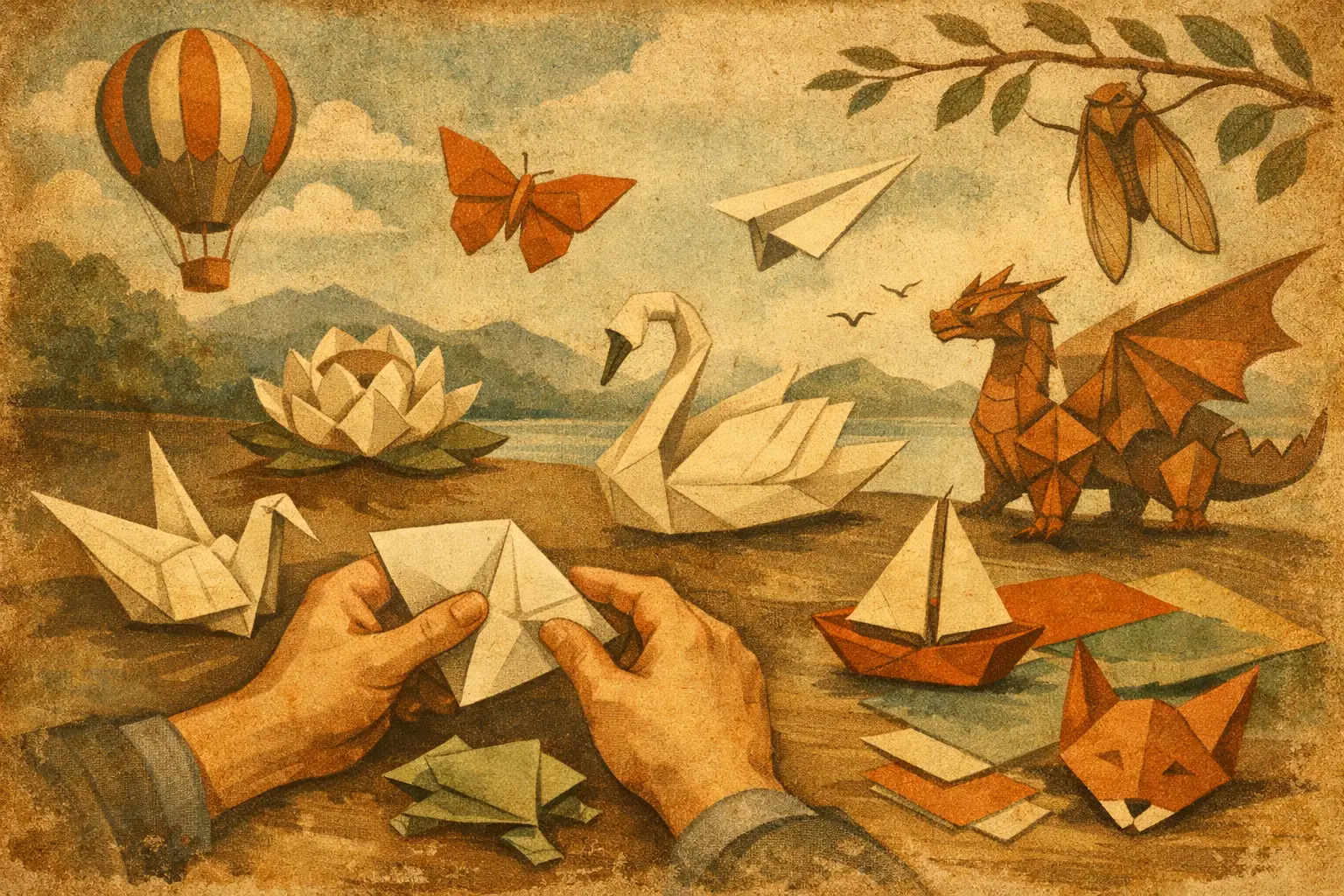
A square of paper can change the mood of an evening faster than most hobbies. That is part of the charm behind origami ideas for adults – they ask for very little, but they give back focus, beauty, and that quiet feeling of making something with your own hands. If you love Japanese culture, origami is not just a craft project. It is a small doorway into design, patience, and the kind of simplicity that feels very close to wabi sabi.
What makes origami especially satisfying for adults is that it can meet you where you are. You might want a calming ritual after work, a handmade decoration for your home, a thoughtful gift topper, or a deeper connection to traditional Japanese aesthetics. The best project depends on that goal. Some models are meditative and repetitive. Others are sculptural and a little demanding. Both can be rewarding.
Why origami works so well for adults
A lot of people assume paper folding is mainly for kids because it looks approachable. That is only half true. The entry point is easy, but the range is huge. Adult beginners can start with clean, elegant folds, while experienced crafters can spend hours on complex geometric forms.
There is also something very appealing about the limits of origami. Usually you begin with one sheet, no cutting, no hiding mistakes with extra materials. That restraint is part of the beauty. It reflects a Japanese design sensibility many of us love – doing more with less, and finding meaning in form, balance, and negative space.
Origami also fits modern life better than many crafts. It is portable, affordable, and easy to pick up for fifteen minutes at a time. If you already enjoy calligraphy, tea culture, ceramics, kimono patterns, or Japanese interior style, origami feels naturally connected to those interests.
Origami ideas for adults that feel genuinely rewarding
The most enjoyable projects tend to be the ones that match your patience level and your reason for folding. Here are twelve that work especially well for adult hands and adult tastes.
1. The classic crane
Yes, it is famous, and yes, it is still worth making. The crane carries deep emotional resonance in Japanese culture and has become a symbol of hope, peace, and longevity. For adults, the appeal is not only symbolic. The folding sequence has a graceful rhythm once you learn it, and finished cranes look beautiful in a bowl, on a branch display, or hanging in a small mobile.
If you are a beginner, this is a good stretch project rather than a first project. It teaches precision without feeling purely technical.
2. A lotus flower
A lotus folded from paper has a lovely balance of structure and softness. It works well as a table decoration or as part of a seasonal display. Adults often enjoy this model because it feels more decorative than playful, especially when made with washi-style paper or subtle colors.
The trade-off is that neat petal shaping matters. If your folds are sloppy, the flower can lose some elegance. Still, it is one of the most satisfying ways to bring a little calm beauty into a room.
3. Modular stars
Modular origami is perfect for adults who enjoy repetition. Instead of folding one finished object from a single square, you create multiple units and assemble them into a star or geometric form. The result feels a bit architectural, and it is ideal for holiday decor, window displays, or handmade gifts.
This is where origami starts to overlap with the pleasure of pattern and order. If you like Japanese textiles, sashiko, or the harmony of repeated motifs, modular stars can be very addictive.
4. An origami box with lid
Useful projects tend to keep adults interested, and a folded box has real everyday value. You can use one for tea sachets, jewelry, paper clips, or small keepsakes. It also makes gift wrapping feel more personal.
This is a great reminder that origami is not only symbolic or decorative. It can be practical too. A well-made box in understated paper captures that clean, intentional look that many Japan lovers appreciate.
5. Butterflies for seasonal decor
Butterflies are a strong choice if you want something expressive without a long learning curve. They can be delicate, graphic, or playful depending on the paper you choose. Display a few on a wall, add them to a greeting card, or place them near a vase for a light spring feeling.
For adults, the fun is often in color and texture. Chiyogami-inspired prints can make a simple butterfly feel almost like a tiny ukiyoe pattern study.
6. A paper iris or tulip
Flower models are ideal if you want origami that does not scream craft table. A single stem in a small ceramic vase can look surprisingly refined. Tulips are usually easier, while irises bring more of a traditional Japanese mood.
These work especially well if you enjoy arranging objects at home. A folded flower next to a cup of sencha or a favorite incense holder can create a very quiet, intentional corner.
7. A fox
Animal models often get overlooked by adults because they seem too cute, but the fox is different. It has sharp lines, personality, and a slightly mysterious feeling. In a Japanese context, many people also enjoy the cultural associations with kitsune imagery, shrines, and folklore.
This makes the fox a strong choice if you want a piece that feels playful and grown-up at the same time.
8. A samurai helmet
The kabuto is bold, simple, and full of character. It is one of those models that connects immediately to Japanese history and visual culture. Even if you are not deeply into martial themes, the shape has enough presence to feel iconic.
It is also beginner-friendly, which makes it a good project for folding with friends or at a Japan-themed gathering.
9. An envelope or letter fold
Some of the best origami ideas for adults are the ones you can actually use in daily life. A folded envelope for a handwritten note, a gift card, or a small message feels thoughtful in a way store-bought packaging usually does not.
If you study Japanese language or enjoy pen pals, this project adds ceremony to communication. That matters. Adults often come back to crafts that make ordinary moments feel more intentional.
10. A rabbit
Rabbits can be minimal and elegant when folded in plain paper, especially white, gray, or soft earth tones. They are nice for seasonal displays and can feel especially fitting around the moon-viewing mood that many Japan lovers find so appealing.
There is a touch of mono no aware here – that gentle awareness of fleeting beauty. A small folded rabbit on a shelf is simple, but it can still carry atmosphere.
11. A kusudama flower ball
If you want a bigger challenge, try a kusudama. These assembled paper spheres are striking and decorative, and they often become conversation pieces. They look wonderful hung near a window or displayed in a creative workspace.
This is not the quickest project, and that is exactly why many adults love it. The process asks for patience, consistency, and a little problem-solving. The final result feels earned.
12. A simple boat or wave-inspired form
Not every adult project needs to be complicated. A clean boat, a stylized wave, or another minimalist shape can be deeply satisfying when the paper is beautiful and the folds are crisp. Sometimes the appeal is not complexity at all. It is restraint.
That is a useful principle in origami. More folds do not always mean more beauty.
Choosing the right paper for origami ideas for adults
Paper changes everything. Standard origami paper is fine for learning, but adults usually enjoy the craft more once they start experimenting. Washi-style textures, matte solid colors, metallic sheets, and patterned paper all create different moods.
Thin paper is easier for complex models because layers build up fast. Thicker paper feels more luxurious, but it can fight you on detailed folds. If you are making flowers or boxes, medium-weight paper is often the sweet spot. If you are practicing cranes or modular forms, lighter paper is usually kinder.
Color matters too. Bright rainbow paper can be fun, but muted tones often feel more sophisticated in home decor. Deep indigo, soft cream, moss green, dusty pink, and warm gray can make even a simple model feel refined.
A few ways to enjoy origami more as an adult
Adults sometimes quit origami too early because they expect perfect results right away. That usually leads to frustration. A better approach is to treat the first version as practice and the second as the real piece.
Good lighting helps. So does a flat surface and paper that is actually square. Precision matters, but not every fold has to be rigid. Some models look better when they hold a little softness. That balance between control and imperfection is part of the appeal.
It also helps to choose projects by mood. If you want to relax, repeat modular units or fold butterflies. If you want challenge, work on a kusudama or a more detailed animal. If you want something useful, make boxes and envelopes. Origami can be many things, and that flexibility is one reason it stays interesting.
For all Japan lovers worldwide, this craft has another layer of pleasure. It brings a tactile, everyday connection to Japanese aesthetics into your own space, whether you live in Tokyo, Texas, or anywhere in between. At Crazy for Japan, that kind of closeness to culture is always worth celebrating.
The nicest thing about origami is that it does not ask you to be an artist before you begin. It just asks you to fold the next line carefully, look again, and let the paper teach your hands what comes next.