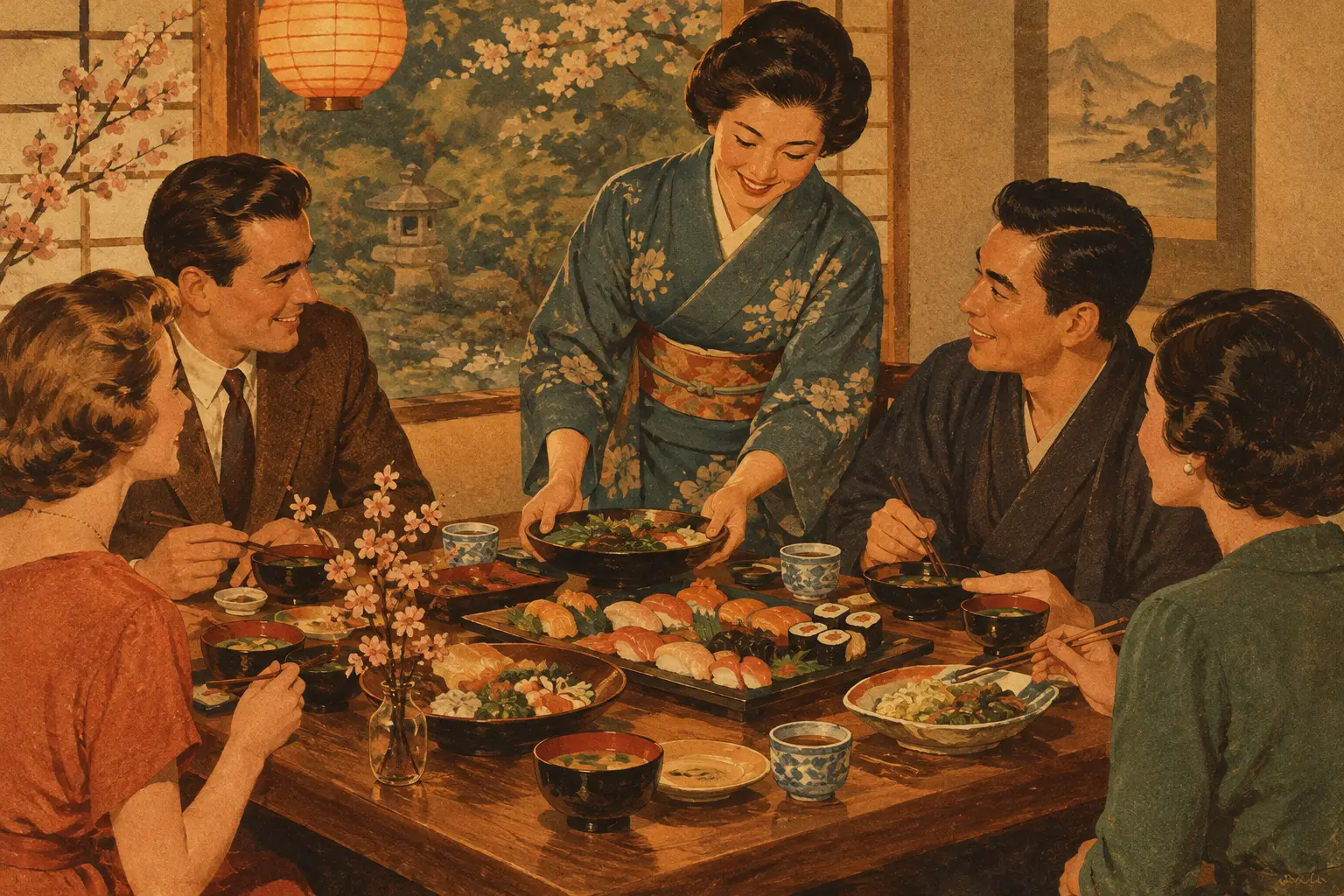
A memorable Japanese table does not need a sushi chef, a dozen specialty dishes, or a room full of red lanterns. The best japanese themed dinner party ideas begin with a feeling: your guests step out of their usual week and into an evening shaped by care, seasonality, and omotenashi, the Japanese spirit of wholehearted hospitality.
For all Japan lovers worldwide, that is the real joy of hosting. You are not trying to recreate a restaurant in Tokyo or turn tradition into a costume. You are creating a small gathering where good food, beautiful objects, and unhurried conversation let everyone feel closer to Japan.
Start With One Clear Japanese Dinner Party Theme
Japan contains many regions, seasons, and food traditions, so a broad “Japanese night” can quickly become a cluttered mix of ideas. Pick one mood and let it guide the menu, table, music, and activities. This makes a modest apartment dinner feel intentional rather than over-decorated.
A spring hanami gathering can center on pale pink flowers, chirashi sushi, green tea, and a few sweet treats. For autumn, take inspiration from momiji, or red maple leaves, with mushrooms, roasted kabocha squash, and warm tea. A winter nabe night is especially friendly for first-time hosts: a simmering communal hot pot gives people something delicious to do together.
You could also build the evening around a place rather than a season. Think of a Kyoto machiya-inspired supper with handmade ceramics, bamboo details, and simple vegetable-forward dishes. Or set a quieter onsen ryokan mood using soft towels, cedar-like scents, tea, and a calming dinner served in small courses. Keep the theme respectful and light. A few well-chosen details say more than a room packed with stereotypes.
Build a Menu Around Shared Comfort
The most successful menu is not necessarily the most ambitious. Choose food you can serve confidently and spend your energy on welcoming people. Japanese meals often create pleasure through balance: something warm and savory, something fresh, something pickled, rice, and a sweet finish.
For a sit-down dinner, begin with edamame, chilled cucumber sunomono, or small bowls of miso soup. A main course could be teriyaki salmon, chicken karaage, tofu steak with scallions, or miso-glazed eggplant. Add steamed rice and a crisp cabbage salad with sesame dressing. These dishes are approachable for American guests while still offering recognizable Japanese flavors.
If you want the gathering to feel more social, make temaki sushi, or hand rolls, the centerpiece. Put out seasoned rice, nori sheets, sliced avocado, cucumber, cooked shrimp, imitation crab, smoked salmon, tofu, and shredded vegetables. Guests can make their own combinations without the pressure of perfect sushi-rolling technique. Be clear about what is raw and what is cooked, and skip raw fish unless you know how to source, store, and serve it safely.
Nabe is another excellent choice when the weather turns cool. Arrange sliced vegetables, mushrooms, tofu, noodles, and thinly sliced meat or seafood around a portable burner. The pot bubbles in the center of the table while guests add ingredients in stages. It is relaxed, communal, and naturally creates the kind of slow conversation people remember.
Do not overlook drinks. Offer chilled mugicha, Japanese-style roasted barley tea, or sparkling yuzu soda alongside beer, sake, or Japanese whisky if your group drinks alcohol. Sake does not have to be ceremonial. Serve it slightly chilled in small cups, explain that everyone can enjoy it at their own pace, and make sure nonalcoholic options look just as inviting.
A note on course order and portions
You do not need to follow formal kaiseki rules at home. Kaiseki is a highly considered dining tradition, and copying its structure without the training or ingredients can feel forced. Instead, borrow its attention to pace. Serve one or two small starters, bring out the main meal while it is hot, then end with tea and a simple dessert.
Small portions help guests sample more and reduce waste. They also create a lovely sense of abundance when served in mismatched bowls, plates, and little dishes. This is where wabi sabi can be a useful hosting idea: beauty does not require everything to match perfectly. A handmade bowl, a folded linen napkin, and an unevenly shaped ceramic plate can feel more personal than a formal set.
Set a Table With Texture, Not Clutter
Skip plastic cherry blossoms and crowded novelty décor. Start with a clean table, neutral runner, and a limited color palette. Indigo, soft white, charcoal, natural wood, and one seasonal accent color work beautifully. In spring, add a branch in a simple vase. In fall, scatter a few real leaves or use one small arrangement of chrysanthemums.
Give each place setting a bowl, small plate, chopsticks, and a cloth napkin. If some guests are not comfortable with chopsticks, quietly place forks nearby. Hospitality matters more than making anyone prove themselves. You can add chopstick rests made from smooth pebbles, folded paper, or small pieces of wood.
Cloth details go a long way. Use a furoshiki, the traditional wrapping cloth, as a table accent or to wrap a host gift. Fold a few origami cranes as place cards, but keep them simple and purposeful. If you have Japanese textiles, pottery, or ukiyoe prints that you genuinely love, let those personal pieces lead the room.
For lighting, choose warm lamps, tea lights in safe holders, or paper lanterns made for indoor use. The goal is an intimate glow, not a themed restaurant set. A little empty space is part of the atmosphere.
Give Guests One Hands-On Cultural Moment
Food will carry most of the evening, but one shared activity adds warmth and helps people connect. Keep it optional and easy enough that no one feels put on the spot.
A mini origami station works well before dinner. Choose one design, such as a crane, maple leaf, or small masu box, and provide square paper in a few colors. You can use the finished boxes for wrapped candy or tea bags. If your group enjoys art, set out brushes, ink, and practice paper for a casual shodo-inspired calligraphy activity. Offer a few simple words such as yume (dream), tomo (friend), or kokoro (heart), and emphasize that the point is the gesture, not perfect characters.
For a quieter activity, invite guests to write a small note about a place in Japan they hope to visit or a Japanese craft they want to learn more about. Collect the notes in a wooden box or display them on a branch. It is a lovely way to make a gathering feel like a community of curious travelers rather than just another dinner.
Make the Etiquette Welcoming, Not Stressful
A short, cheerful introduction to a few customs can make guests more comfortable. Before eating, say “itadakimasu” together if the group is interested. It expresses gratitude for the meal and everyone involved in bringing it to the table. At the end, “gochisosama deshita” is a kind way to thank the cook.
Avoid turning etiquette into a test. Chopsticks should not be stuck upright in rice, since that resembles a funeral offering, and passing food chopstick-to-chopstick is also best avoided. Beyond that, relax. People may use a fork, ask questions, or mix up a phrase. A generous host makes room for learning.
If you serve shared platters, provide serving utensils. If you pour sake, you may offer to refill another person’s cup before your own, but do not pressure anyone to drink. These little gestures communicate care without making the evening feel formal.
Let the Evening Slow Down at Dessert
Instead of rushing to a big, sugary finale, serve something gentle with tea. Mochi ice cream, dorayaki pancakes, fruit, castella cake, or a few pieces of wagashi can be enough. A bowl of fresh strawberries or sliced Asian pear is beautiful too, especially after a rich meal.
This is the moment for mono no aware, a gentle awareness of how lovely moments pass. Put the phones aside for ten minutes, pour another cup of tea, and let the table stay messy. The best Japanese-themed dinner party is not measured by how perfectly everything looked. It is measured by whether your guests leave feeling cared for, curious, and a little more connected to the Japan they love.